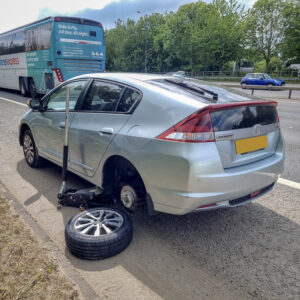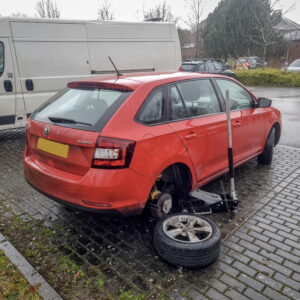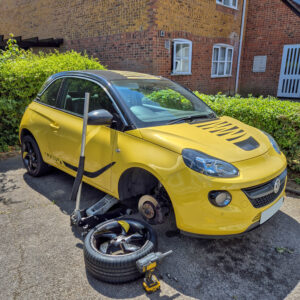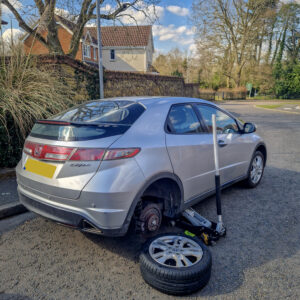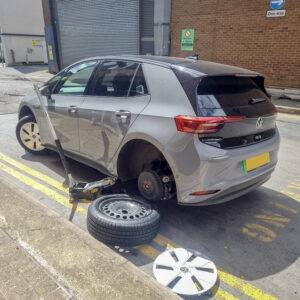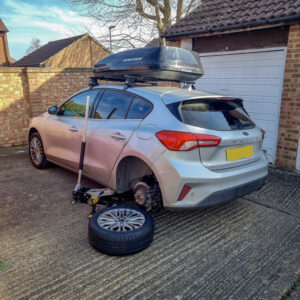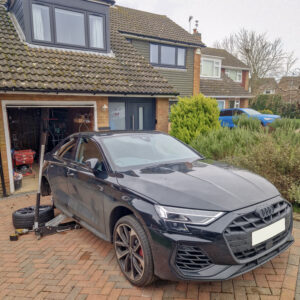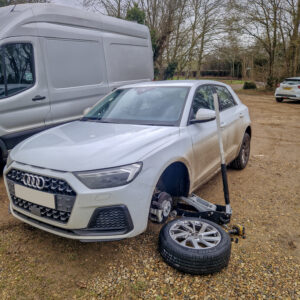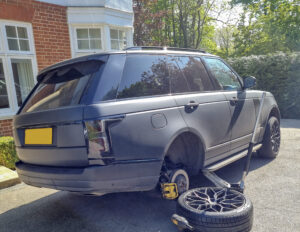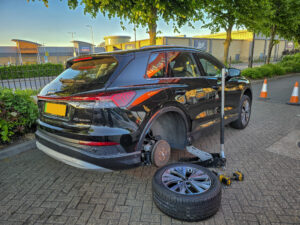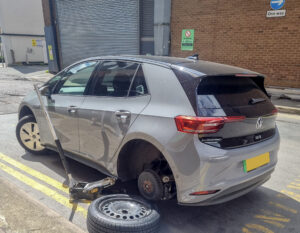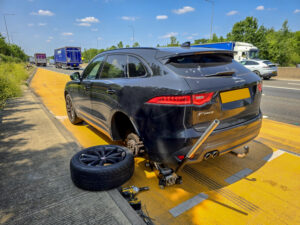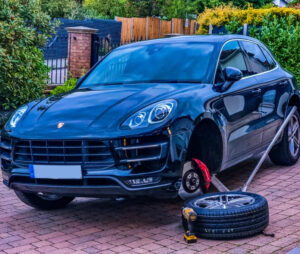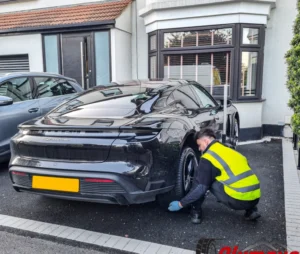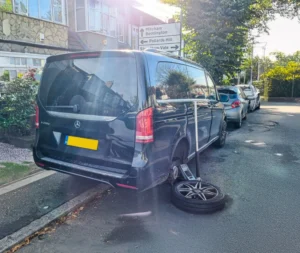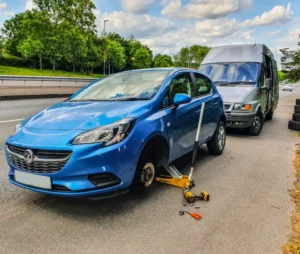
Picture the scene. You are fifteen minutes late for the school run, coffee in one hand, keys in the other, and you spot it from the front step. A tyre sitting flatter than a pancake at a Weight Watchers meeting. A proper tyre puncture repair saves you from turning up at the gates looking like you lost an argument with a hedgehog. It also saves your whole morning from unravelling before it has even started.
Punctures are funny right up until they are not. A tyre that fails at 60mph on the A1(M) near Hatfield is not a laughing matter. Neither is one that gives out halfway round the North Circular in rush hour traffic. How quickly and safely a puncture gets sorted can be the difference between a mild inconvenience and a genuine emergency. Roughly a quarter of a million punctures happen on UK roads every year. Most drivers only think about tyre safety once they are already standing on a verge, staring at a flat tyre and running late.
This guide covers what causes a puncture, when a repair is possible, what a repair should cost, and when replacement is the only safe option. Along the way we will share a few of the situations our own fitters have talked their way through across Hertfordshire and North London. Nothing explains a service better than real jobs on real streets, so customer names throughout this article have been changed to protect their privacy.
What Causes a Tyre Puncture
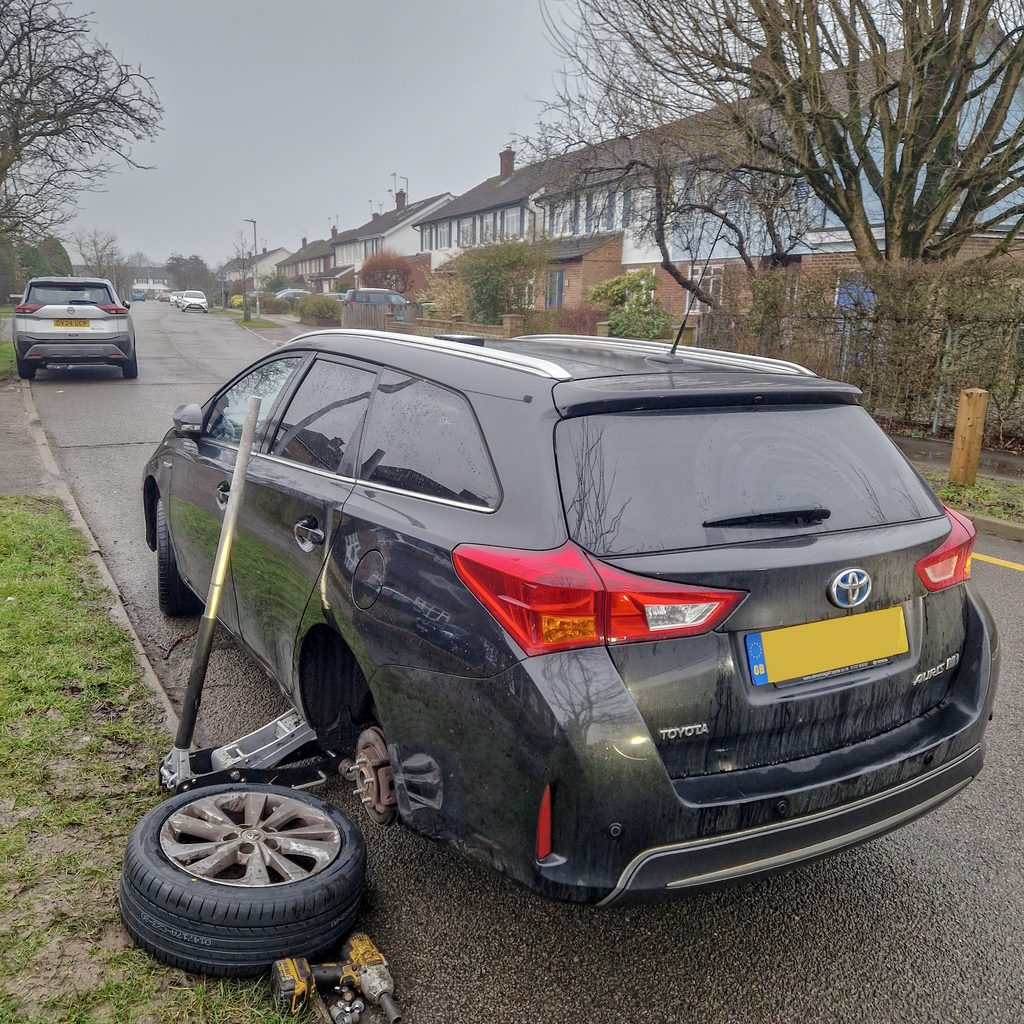
Most punctures come down to simple bad luck. They are not usually a sign that you did anything wrong. A nail dropped by a builder’s van, a stray screw outside a hardware shop in Watford, a shard of glass left behind after last weekend’s bin collection. Sharp debris on the road is the single most common cause. It does not care if your tyres are brand new or three years old.
Kerbing damage is another frequent culprit. Tighter residential streets across North London mean a gentle scrape while parallel parking can weaken a sidewall over time without you noticing straight away. Hertfordshire’s country lanes bring a different hazard in the form of potholes. They seem to multiply every winter and can cause sudden impact damage that looks identical to a puncture from the driver’s seat.
Under-inflated tyres are also far more likely to pick up damage. A soft tyre flexes more under load and lets sharp objects dig in deeper before you even notice. A faulty valve stem or a slow leak around the wheel rim can mimic a puncture too. This is exactly why a proper inspection matters before anyone reaches for a repair kit or quotes you for a new tyre.
What to Do the Moment You Spot a Puncture
Your first reaction to a flat or fast-deflating tyre sets the tone for everything that follows. Stay calm and grip the wheel firmly if it happens while you are driving. Avoid braking hard or swerving, since a sudden movement on a soft tyre can send the car off line.
Ease off the accelerator gradually and steer towards the hard shoulder, a layby, or the nearest safe side street. Put your hazard lights on as soon as you slow down, especially on faster roads like the A414 or the North Circular where visibility matters. Once you are stopped safely, take a look at the tyre from a distance before deciding what to do next.
A tyre that is flat but still holding its shape is usually fine to leave until a technician arrives. A tyre that has come off the wheel rim, or a car that feels unstable, needs a full recovery service instead of a standard puncture repair. If you are ever unsure if your situation counts as a genuine emergency, our guide to situations that call for emergency tyre fitting covers the borderline cases. Either way, avoid driving any further than you absolutely have to, because a few extra miles on a damaged tyre can turn a simple fix into a full replacement.
Can a Puncture Be Repaired?
The honest answer is that it depends. Any fitter who tells you every puncture is automatically fixable is not being straight with you. The location of the puncture and the size of the hole make the biggest difference to the outcome. General tyre condition also plays a part, along with how the damage happened in the first place.
The BS AU 159 Rules Behind Every Safe Tyre Puncture Repair
Every legitimate repair in the UK follows British Standard BS AU 159. It sets out exactly where a repair is allowed, how large the damage can be, and which materials and methods count as safe. This standard exists because a badly repaired tyre is a genuine road safety risk, not a box-ticking exercise for the garage.
A repair is only permitted within the central three-quarters of the tread, an area fitters often call the T-zone. The hole itself cannot be larger than 6mm, which covers the vast majority of everyday nail and screw punctures. Damage to the sidewall is never repairable. The sidewall carries the structural load of the tyre, and a patch there cannot be trusted at motorway speed.
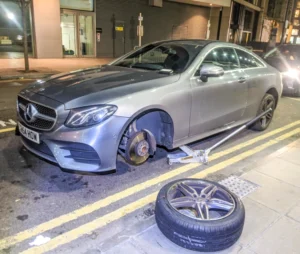
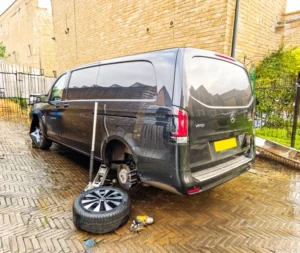
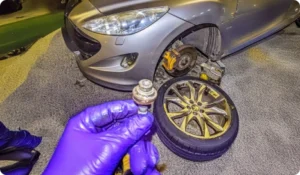
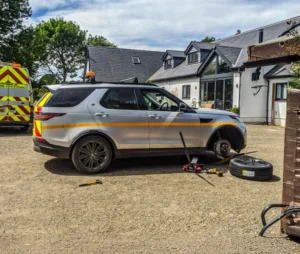
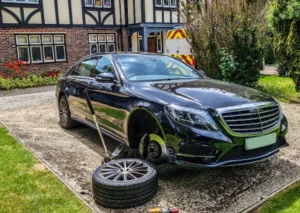
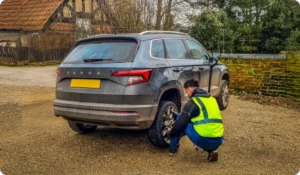
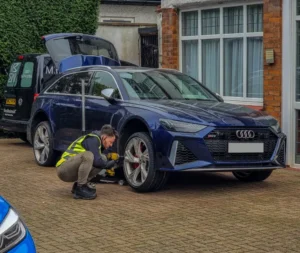
A properly trained technician removes the tyre from the wheel and inspects it inside and out before touching a repair kit. This catches damage you cannot see from outside, such as internal cord separation or heat damage from being driven while flat. A mobile tyre puncture repair follows exactly the same rules as a workshop repair. The only real difference is that the inspection happens on a driveway in Borehamwood instead of a bay in town. If you are weighing up which route to take, our full breakdown of mobile repairs versus garage repairs covers the practical differences.
Run-flat tyres are a separate case entirely. Most manufacturers advise against repairing them at all, because their reinforced sidewalls make hidden internal damage much harder to spot. If you run run-flats and pick up a puncture, get them properly assessed instead of assuming a standard fix will do the job.
A Day in the Life of an Olympus Fitter
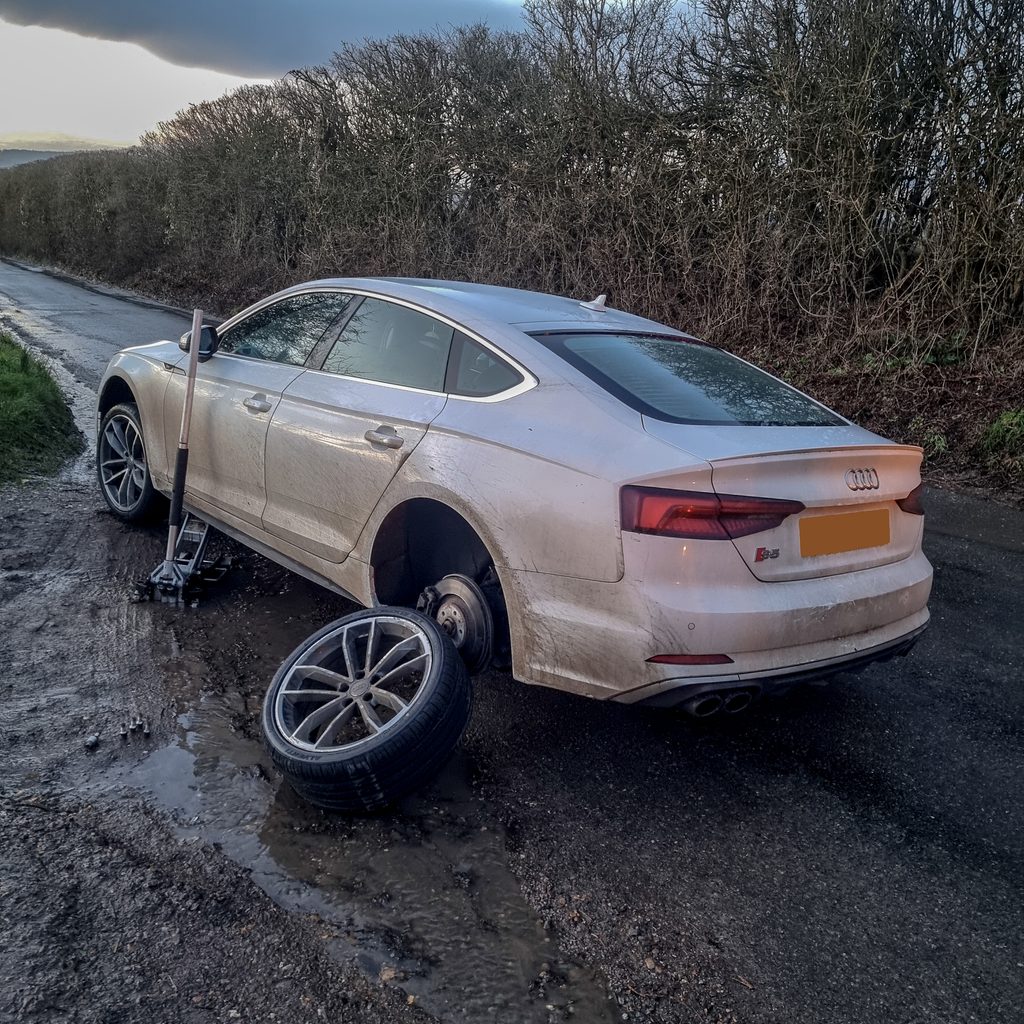
Ask any of our technicians what surprised them most about the job and you will get a different answer every time. There was the frozen wheel nut on a January driveway in St Albans that took three separate attempts to shift. There was the very determined spaniel who supervised an entire repair in Radlett from about four inches away. One of our fitters was once asked to move his van because he was blocking a wedding photographer’s ideal shot outside a church in Barnet. He is still waiting to see the photos. Another technician spent a whole December fixing punctures caused by discarded Christmas tree pins along one stretch of road in Potters Bar. Nobody puts that hazard on a training course.
What does not change is the standard of the work. Every technician on our team carries out the same BS AU 159 checks in a supermarket car park in Hemel Hempstead or a quiet cul-de-sac in Finchley. Years of doing this across Hertfordshire and North London teach you to read a tyre fast. That speed matters when the person waiting for you has somewhere to be and a toddler getting restless in the back seat.
How Much Does Tyre Puncture Repair Cost in the UK?
Puncture repair cost UK prices vary depending on where you go and if you need someone to come to you. National chains and independent garages typically charge between £20 and £35 for a standard repair carried out in their own workshop. Book a mobile technician and you are usually looking at £35 to £45. That price covers the fitter travelling to your home, workplace, or roadside location, so you are not left driving on a damaged tyre just to reach them. If your tyre turns out to need replacing instead of repairing, our same day tyre fitting service means you are not stuck waiting around for the next available slot.
That difference in price buys you something most drivers only appreciate once they have needed it. One of our regulars is a nurse named Karen who works in Hemel Hempstead. She called us after finishing a night shift to find a screw sitting neatly in her rear tyre in the hospital car park at 7am. One of our technicians was there within forty minutes. They confirmed the damage sat well inside the repairable zone, patched it properly, and had Karen home in time to sleep before her next shift.
We hear a version of that story from across our patch most weeks, and it is the whole reason the mobile model exists. You pay a little more than a walk-in garage price. In return, you get your morning back, your afternoon back, or in Karen’s case, your sleep back. Prices can shift slightly depending on tyre size and if the wheel needs balancing afterwards, so always ask for a firm quote before the technician starts work.
Nail in Tyre: What to Do Next
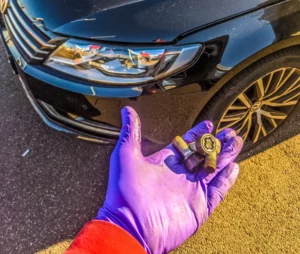
Finding a nail in your tyre is one of the most common calls we get, and it usually causes more panic than it needs to. A nail in tyre repair is often one of the simplest jobs a fitter can do. That is true provided the nail sits in the central tread area and has not caused any damage on its way in.
Do not pull the nail out yourself. It may be acting as its own temporary plug, and removing it can turn a slow leak into a fast one within minutes. Instead, check your tyre pressure and avoid motorway speeds where you can. Get the tyre looked at as soon as possible. If the nail sits close to the sidewall, or the tyre has already gone completely flat, treat it as urgent instead of something to sort next week.
In Enfield, a customer named James noticed his steering pulling gently to one side and assumed his wheel alignment was playing up again. Our technician found a roofing nail buried in the tread, still holding most of the air in place. They repaired it on the spot before it could turn into a Sunday morning breakdown outside the football grounds. If your situation feels less contained than that, our emergency mobile tyre fitting team can reach you faster.
Slow Puncture vs Sudden Puncture
A slow puncture repair is generally an easier and cheaper job than dealing with a sudden blowout. There is no drama involved and no roadside stop required. The tricky part is spotting a slow puncture before it becomes a flat tyre at the worst possible moment, usually five minutes before the school run.
Watch out for these signs:
- The steering wheel feels slightly heavier or vibrates gently at speed
- The car pulls softly to one side on a straight, flat road
- One tyre looks visibly lower than the others when you walk past it
- Your tyre pressure warning light comes on and refuses to go away
A customer named Priya in Finchley messaged us one Sunday evening after her tyre pressure light came on, worried about the nursery run the next morning. Our fitter found a small nail lodged neatly in the tread, well within the repairable zone, and had it sorted on her driveway before breakfast. Priya told us afterwards it was the calmest puncture experience she had ever had.
A sudden puncture tends to announce itself immediately with a bang, a thump, or a hard pull to one side while driving. If that happens at speed, ease off the accelerator gently and avoid braking hard. Pull over somewhere safe as soon as you reasonably can.
Tyre Repair vs Replacement: When You Really Need a New Tyre
Every fitter would rather repair a tyre than sell you a new one. A fair repair keeps you coming back for years, not just for one visit. The tyre repair vs replacement decision comes down to the same checks covered earlier, plus the overall condition of the tyre.
Replacement becomes the only safe option in a few clear situations. The puncture might sit outside the central tread area, or the hole might be larger than 6mm. The tyre might show sidewall damage or cracking from age, and any of these on their own is enough to rule out a repair. Tread depth matters here too. UK law requires a minimum of 1.6mm across the central three-quarters of the tyre, and the official government guidance sets out exactly what an inspector checks for during an MOT.
A worn tyre with a fresh puncture on top is rarely worth patching. A good fitter will tell you that honestly instead of fixing something that will only fail again within weeks. If a repair genuinely is not safe, our mobile tyre fitting service can get a proper replacement sorted at your home or workplace the same day. A written-off tyre should not have to mean a written-off week.
Finding a Mobile Fitter Near You
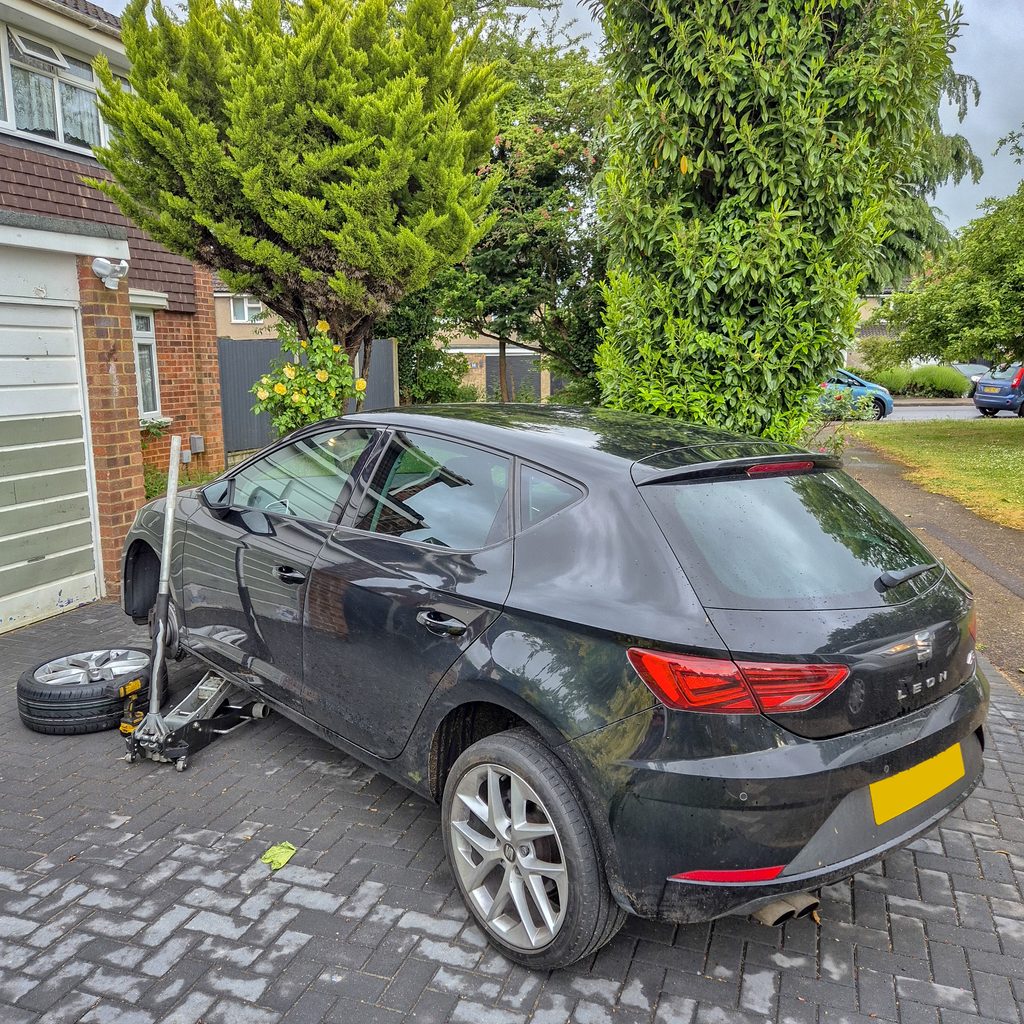
Searching for tyre repair near me usually means you need help now, not a callback in three days. That is the entire point of a mobile service, and our full guide to mobile tyre fitting near you goes into more detail on how it works. Instead of nursing a soft tyre through Hertfordshire or North London traffic, you get a fully qualified technician who comes to you.
You might have spotted a nail on the driveway in St Albans. You might be stranded outside a supermarket in Barnet with a warning light flashing and a car full of shopping. Either way, the process is the same. You call us, we ask a few quick questions about the damage, and we send a technician to your door.
Every repair is carried out to a proper, checked standard, on the spot, and backed by our workmanship guarantee. That is the whole job, done properly, without you having to move an inch.
Book your mobile tyre puncture repair with Olympus today and have a fully qualified technician at your door within the hour. Visit our tyre repair page to check availability in your area and get back on the road safely.