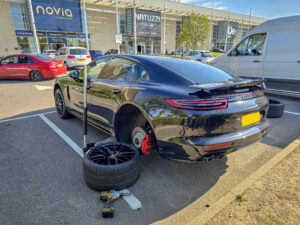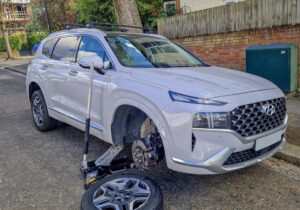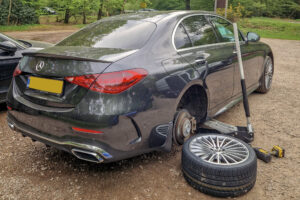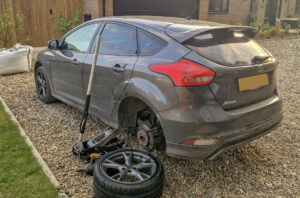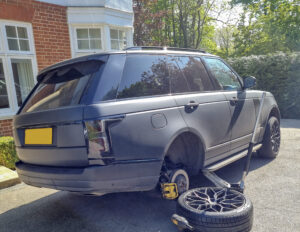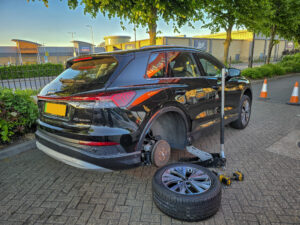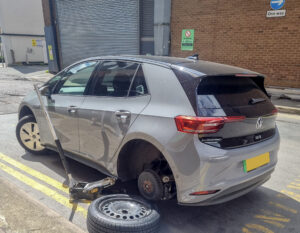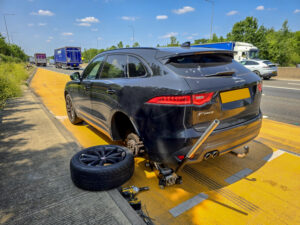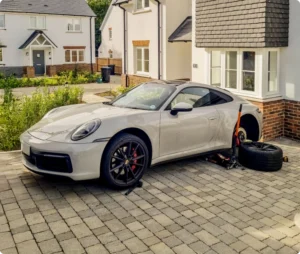
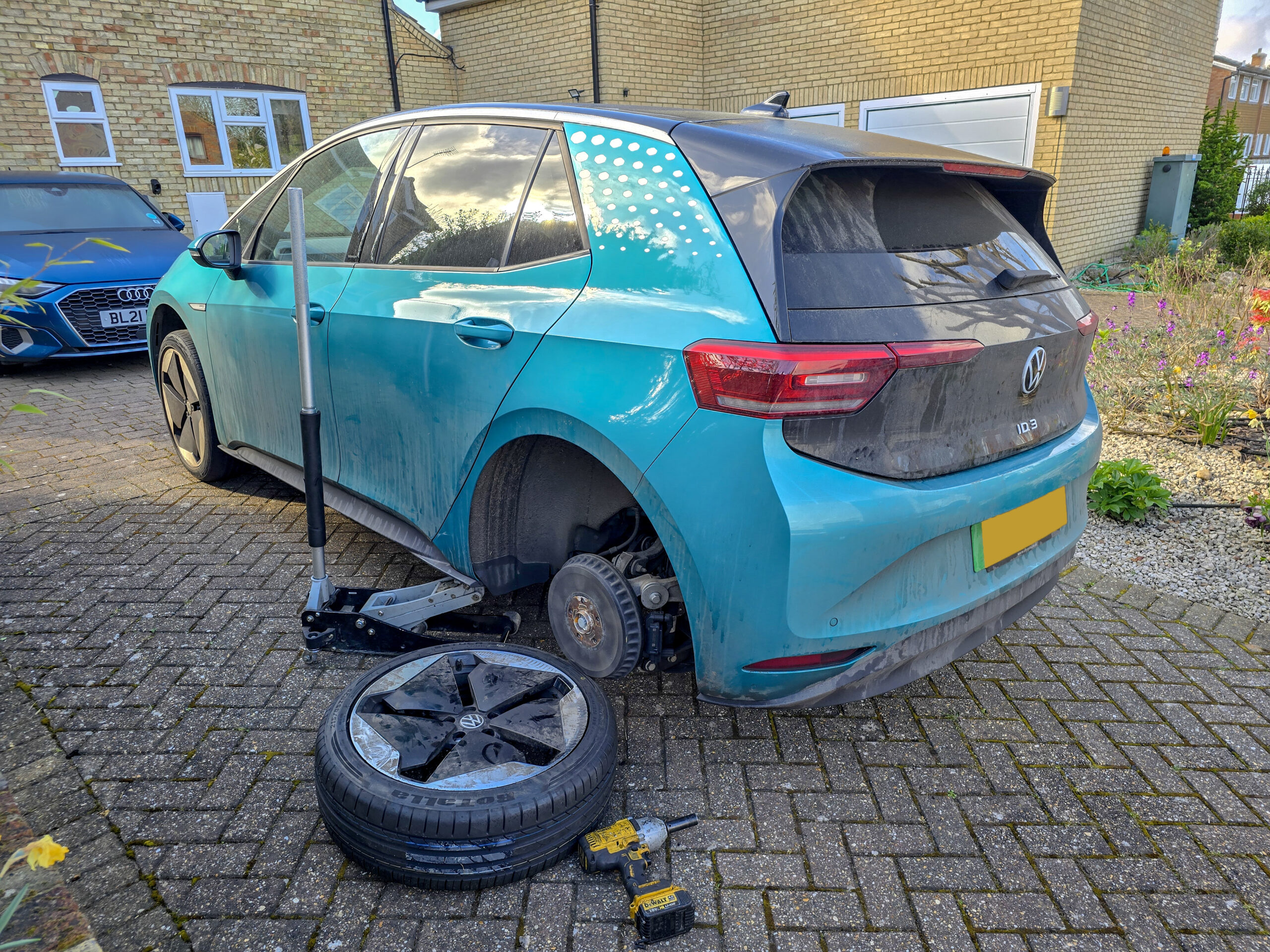
Tyres have a talent for failing at the worst possible moment. It’s usually a wet Tuesday, you’re already running late, and the nearest garage is on the far side of a roundabout you’d happily never meet again.
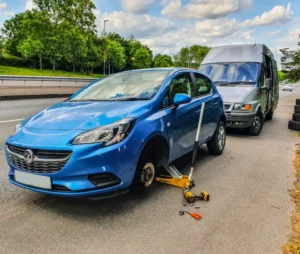
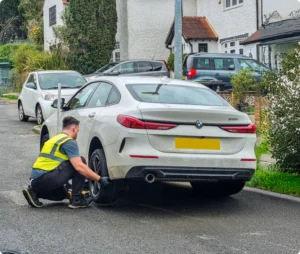
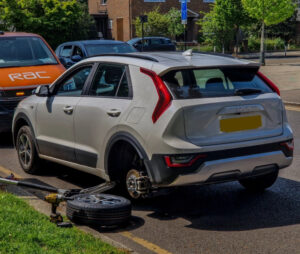
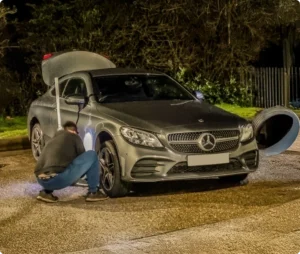
That’s why mobile tyre fitting exists. A fitter brings the machine, the balancer, and the right tyre to your driveway, office car park, or lay-by, so you never have to limp to a garage on a damaged tyre.
We’ve spent ten years doing this across Hertfordshire and North London, and the roads teach you quickly.
Winter potholes on the lanes around Codicote and Wheathampstead. Rush-hour crawls on the A414. Debris on the M25 near London Colney and the A1(M) at Hatfield.
In St Albans and Harpenden, plenty of calls start with a soft tyre spotted on the driveway before the school run. In Barnet and Wood Green, tight terraced streets mean parking space decides how we set up.
Here’s what a decade teaches you. Changing a tyre looks simple, and it isn’t. Wheel nuts need the correct torque. Valves need replacing. Wheels need balancing. Skip any of those, and you’ll feel it through the steering wheel within a week.
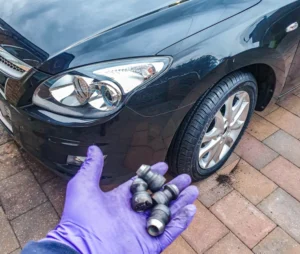
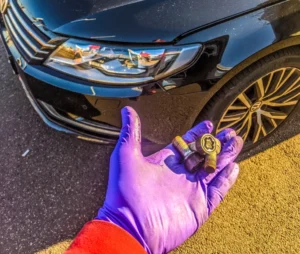
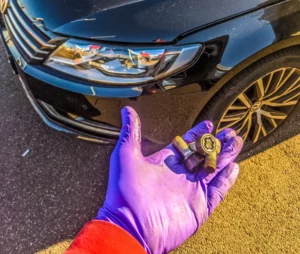
Then there’s the locking wheel nut. Lose the key, reach for the pliers, and you’ve rounded the nut and scarred an alloy before the real job even starts. We’ve seen it more often than we’d like to admit.
So here’s our honest advice. Some jobs suit a confident DIYer. Fitting a tyre rarely does. It’s usually best to leave it with experienced experts who’ve got the right kit, and who’ll do it once, do it safely, and do it properly.
This guide covers it all: what mobile fitting costs, what the price includes, how long it takes, how to pick between budget and premium, and the warning signs you shouldn’t ignore.
Read on, and your next flat won’t catch you out. If it already has, same-day fitting is a phone call away.
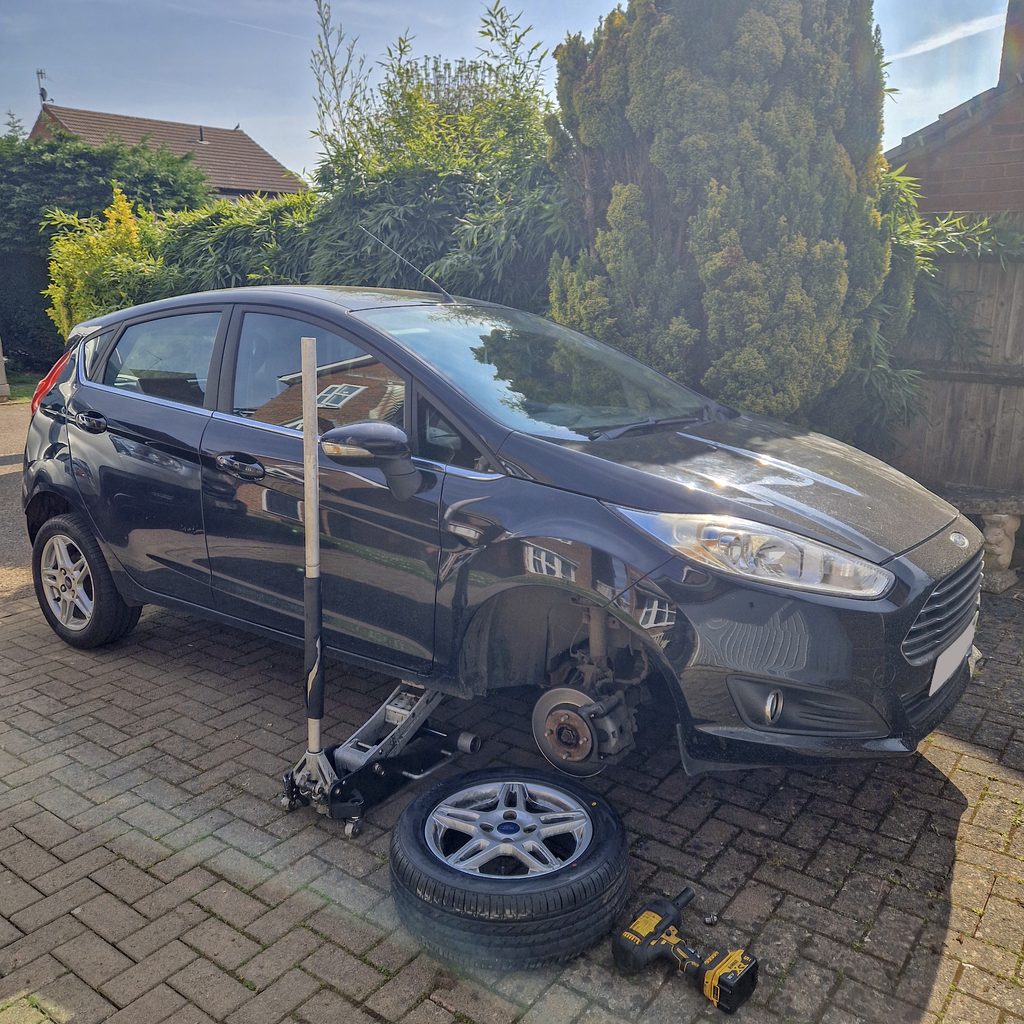
How Mobile Tyre Fitting Works
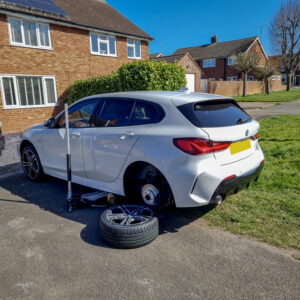
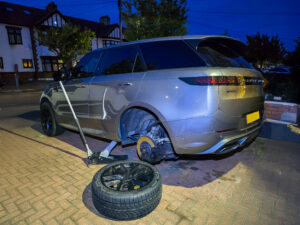
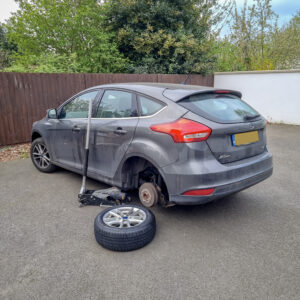
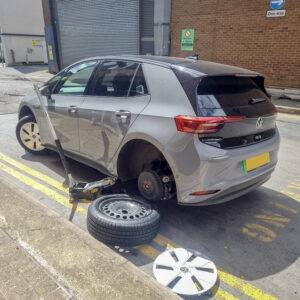
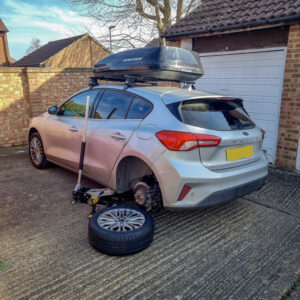
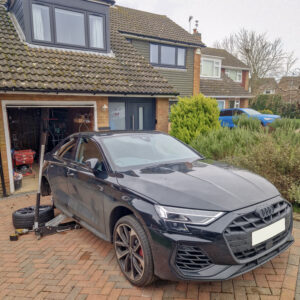
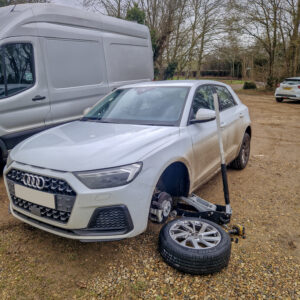
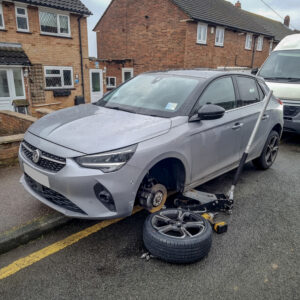
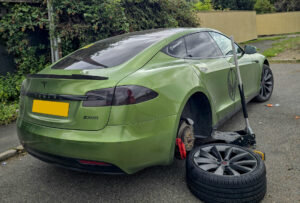
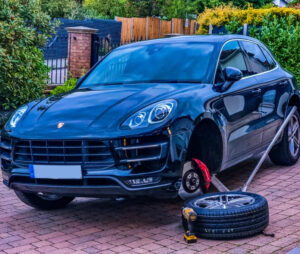
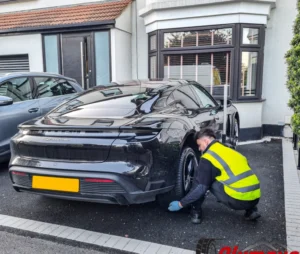
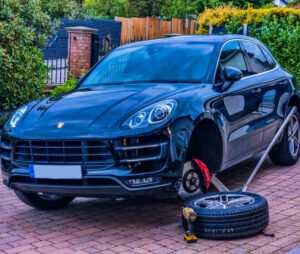
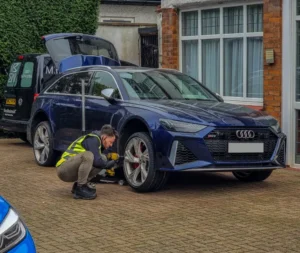
Think of it as a tyre garage on wheels. Our vans carry a hydraulic tyre changer, a digital wheel balancing machine, and the most common tyre sizes, so the whole job happens on your driveway.
You tell us where you are, what you drive, and your tyre size. The size is printed on the sidewall, with a backup on a sticker inside the door frame or fuel flap. If you can’t find it, we’ll talk you through it.
The fitter arrives, inspects the tyre inside and out, and gets to work. Expect around 25 to 30 minutes per tyre, so most single-tyre jobs wrap up in under an hour.
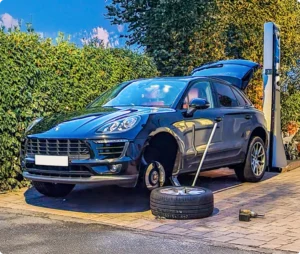
All we need is room to work safely. A driveway, a workplace car park, or a quiet side street will do. We also offer two-hour and four-hour windows, so we can fit around your lunch break or the school run.
If we can’t fit your tyre for any reason, you don’t pay. That’s our no-fix, no-fee promise, and it means you carry no risk at all.
Why Tyre Safety Deserves Your Attention
Your tyres are the only part of your car that touches the road. Everything else, from the brakes to the clever electronics, depends on a few small patches of rubber doing their job.
The numbers make the case. Road safety charity TyreSafe puts the 2025 total at 201 people killed or seriously injured in tyre-related incidents. That’s a 19 per cent rise on the year before, and 38 more than the five-year average.
The same charity says more than six million tyres a year on UK roads have illegal tread. That’s a lot of drivers who haven’t looked down lately.
The legal minimum is 1.6mm across the central three-quarters of the tyre. Most safety bodies suggest changing earlier, closer to 3mm, and our guide to tyre tread depth and the UK legal limit shows you how to check yours with a 20p coin.
A good fitting can’t rescue a bald tyre. What it can do is make sure a sound tyre goes on properly, with the right pressure, balance, and torque. That’s where safety starts.
What Mobile Tyre Fitting Costs
Budget tyres start from £100 fitted for cars, and from £120 fitted for vans and caravans. The price we quote before we leave is the price you pay when the job’s done.
Each fitting includes the tyre, the fitting itself, a new valve, digital wheel balancing, a pressure check on all four wheels, and removal of your old tyre. Specialist valves are the one exception.
We carry three tiers. Sailun covers the budget end with solid, dependable performance at the lowest price. Hankook, Firestone, and Yokohama sit in the middle. Michelin, Pirelli, Bridgestone, Continental, Goodyear, and Dunlop make up the premium range.
Budget rubber suits a second car that rarely leaves town. If you’re clocking motorway miles on the M25 and A1(M), or you drive a lot in the wet, premium tyres tend to repay the extra in wet grip and tread life.
Replacing tyres in pairs is often sensible. If two are worn and two still have good tread, change the worn pair. If all four are near the end, change them together for even wear.
On all-wheel-drive cars, big differences in tread depth can strain the drivetrain. Tell us the condition of all four tyres when you call, and we’ll give you an honest recommendation.
Mobile Fitting or a Garage: What’s the Difference?
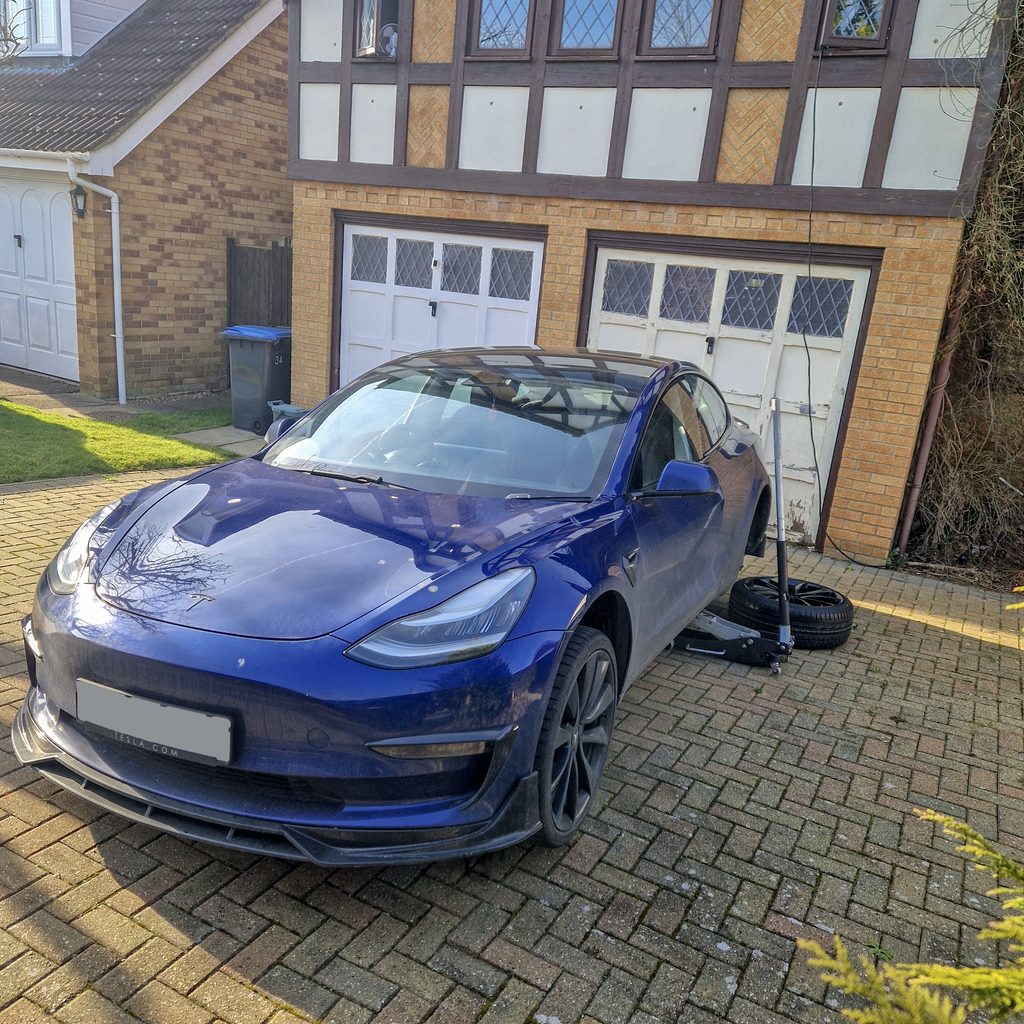
A garage visit takes more than the fitting itself. You drive there on a tired tyre, wait in reception, and drive back, and that’s before you count the fuel.
With mobile fitting, the garage comes to you. You carry on with your day while we work, and you only move when the car’s ready to drive.
Time is where the difference shows most. A job that takes under an hour on your drive can swallow half a morning once you add the journey, the queue, and the wait.
Prices vary, but cutting out the travel and a showroom’s overheads often works in your favour. Our fitting price already includes the balancing, new valve, and disposal, so there’s little to add at the end.
A garage still has its place. If you need brakes, suspension, or a service as well, a workshop’s the right call. Tyres are what we do, and if you need more, we’ll point you to a trusted local garage.
What Hertfordshire’s Roads Do to Your Tyres
Our local roads have had a rough few winters, and the county has been busy fixing them. Hertfordshire County Council figures, reported by We Love Hitchin, show 16,453 potholes repaired between January and the end of May 2026.
That’s the highest number the county has ever recorded. The repairs are welcome. They’re also a reminder of how many holes were out there waiting for your tyres.
A hard pothole strike can bulge a sidewall or knock a wheel out of balance. Neither shows from the driver’s seat until the steering starts to shake or the tyre fails. If you’ve hit a deep one, get the tyre checked.
Narrow lanes around Codicote and Wheathampstead leave little room to dodge a hole, so you often meet it head-on. On faster roads like the A414 between Hemel Hempstead and St Albans, a damaged tyre gives you seconds to react.
Cross into North London, and the hazards change. Kerb strikes on tight streets in Barnet, Wood Green, and Chingford can weaken a sidewall long before it fails, and you won’t always notice the scrape.
Why Autumn Is the Season to Check Your Tyres
As the nights draw in, wetter roads, falling temperatures, and shorter days put tyres under more strain. It’s the time of year when small problems turn into big ones.
Pressure drops as the air cools, so a tyre that looked fine in August can sit soft by November. Check your tyre pressure monthly, and check it cold, before you drive.
Tread matters more now too. Worn tyres cope badly with standing water, and the gap is stark. Dorset and Wiltshire Fire and Rescue Service says a car at 50mph needs 39.5 metres to stop on 1.6mm of tread, against 31.7 metres on 3mm.
That’s why we’d change tyres before they reach the legal limit. A tyre that was marginal in summer can feel dangerous on a wet A414.
If you’re not sure where your tyres stand, book a check before the first hard frost. Winter tends to bring our calls in clusters, and an early check beats a roadside wait on a freezing night.
Real Jobs from Across Our Patch
Nothing explains a service like real jobs on real streets. Customer names in this section have been changed to protect their privacy.
A frozen January driveway in St Albans produced a seized wheel nut that took three separate attempts to shift. That’s the kind of job where brute force costs you an alloy and patience doesn’t.
Karen, a nurse in Hemel Hempstead, finished a night shift at 7am to find a screw in her rear tyre in the hospital car park. We reached her within forty minutes.
The damage sat well inside the repairable zone, so we patched it properly, and she got home in time to sleep. That’s the whole point of a service that comes to you.
Fiona in Wheathampstead had a pressure warning light that wouldn’t go out, even after regular top-ups. We found a small nail in one tyre, and only 2mm of tread on the opposite front tyre.
We repaired the first, replaced the second on the same visit, and left her with a matched pair. She’d had no idea the second tyre was that close to the limit. Most drivers don’t.
One December, a single stretch of road in Potters Bar kept our fitters busy with punctures from discarded Christmas tree pins. Nobody covers that in training.
Four jobs, one pattern. The kit and the know-how matter most when something isn’t as simple as it first looks.
Why It’s Usually Best to Leave It to the Experts
We’ll say it again, because it’s the most useful point in this guide. Plenty of drivers can swap a wheel. Far fewer can fit a tyre properly.
Start with the wheel nuts. Too loose and a wheel can work free. Too tight and they’re a nightmare to undo next time. We torque nuts to the manufacturer’s setting, not by feel.
Then there’s what you can’t see. A tyre can look sound from the outside while the inside hides cord damage, or heat damage from being driven flat. We take the tyre off the wheel and check both sides before any repair.
Repairs follow British Standard BS AU 159. The damage must sit within the central three-quarters of the tread, and the hole can’t be wider than 6mm. Sidewall damage is never repairable, and we’d never pretend otherwise.
Equipment matters too. A hydraulic tyre changer seats the tyre cleanly without scratching your wheel, and a digital balancer stops the vibration that wears tyres unevenly. Neither fits in a garden shed.
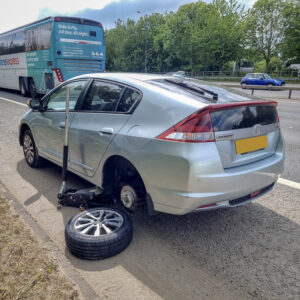
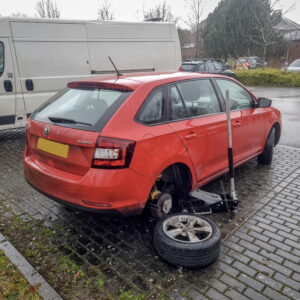
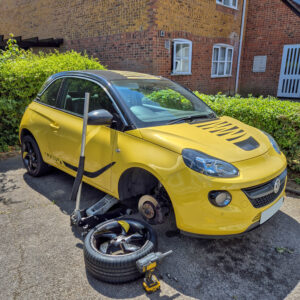
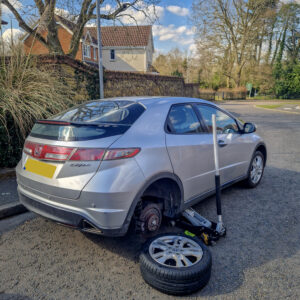
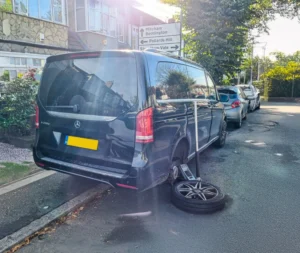
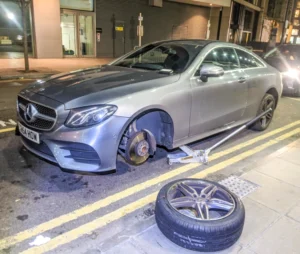
Safety is the other half. Jacking a car on a sloping drive or a soft verge is risky, and changing a tyre on a live road is worse. We’d never recommend it.
About three years ago, we made sure every fitter gained formal qualifications, including Level 2 diplomas in specialist tyre fitting and vehicle fitting principles. Ten years of experience is good. Ten years plus proof is better.
None of this means you should stay out of it. Checking your pressures and tread each month is your job, and it’s a good one. Fitting is ours.
More Than Cars
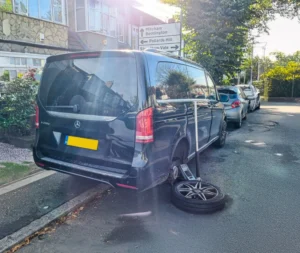
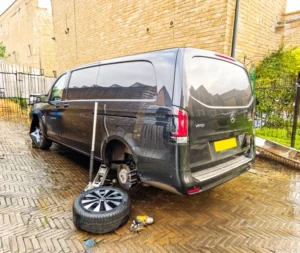
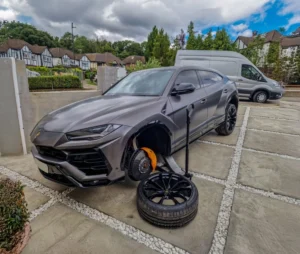
Mobile fitting isn’t only for hatchbacks. We fit tyres on vehicles up to 3.5 tonnes, which covers vans, 4x4s, people carriers, campervans, and caravans.
If a work van off the road is costing you money, tell us when you call, and we’ll prioritise it. Van and caravan tyres start from £120 fitted.
Caravans and campervans need a little extra thought. Tyres age even when they aren’t used, so a caravan that’s sat on the drive all winter deserves a proper check before the first trip of the season.
Getting Ready for Your Fitter
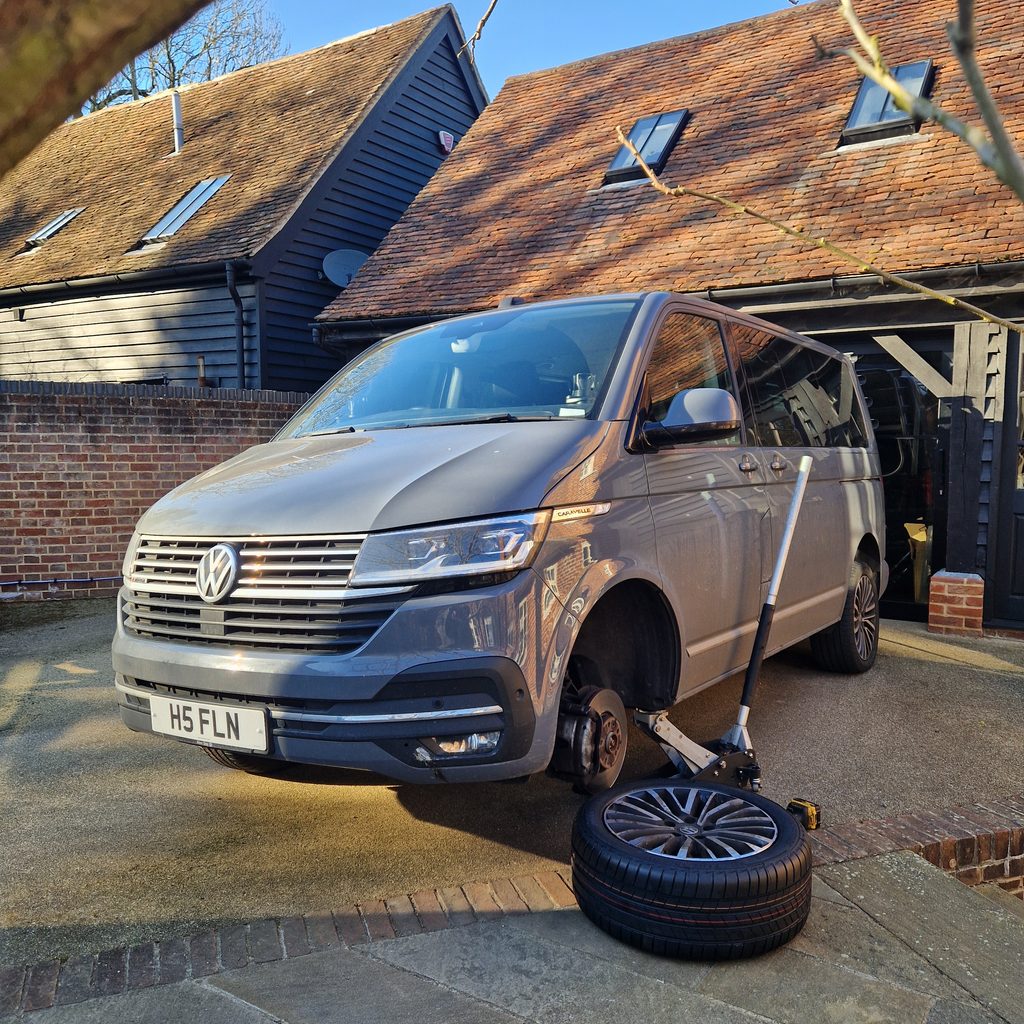
A little preparation makes the job quicker. None of it’s difficult.
Have your tyre size to hand. It’s printed on the sidewall, and your handbook or the sticker inside the door frame lists the size the manufacturer recommends. Read it out when you call.
Find your locking wheel nut key before we arrive. It’s usually in the glovebox or with the spare wheel and jack. If it’s missing, tell us, because we can remove the nut without it.
Leave us room. We need space around the car for the van, the machine, and the wheels. A driveway or a bay in a car park is plenty.
Finally, mention anything unusual, such as low-profile tyres, a van carrying a load, or a wheel that’s been stubborn before. We’ll bring the right kit.
What to Look for in a Mobile Fitter
Not every mobile fitter works the same way, so it pays to ask a few questions before you book.
Ask what the price includes, and ask for the figure before any work starts. Ask about qualifications, and what happens if they can’t fit your tyre. A good fitter answers each one without hesitation.
Ask how they handle repairs, too. A fitter should never push a new tyre when a repair is safe, and should never attempt a repair when it isn’t. That’s our rule, and it’s the one to hold anyone to.
Finally, read the reviews. Ours stand at 374 verified five-star Google reviews, and we’d rather you read them than take our word for it.
When You Can’t Wait
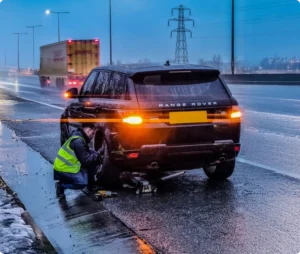
Tyres don’t fail on a schedule. If one goes while you’re driving, ease off the accelerator, avoid hard braking, and get as far off the road as you safely can. Hazard lights on, then call.
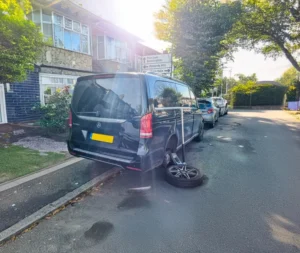
Don’t change a tyre on a live road, and don’t drive on a flat, even a short way. It can wreck the tyre and write off an alloy within minutes.
Our emergency tyre fitting service runs around the clock, seven days a week. We aim to reach you within 60 to 90 minutes, wherever you’re stuck.
Ready When You Are
Mobile tyre fitting isn’t complicated, but doing it well takes kit, training, and a fair bit of experience. That’s what turns up at your door when you call.
Call us from your driveway, your office car park, or a lay-by on the A414, and we’ll tell you what it’ll cost and when we can be there.