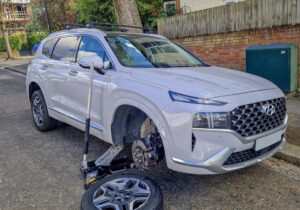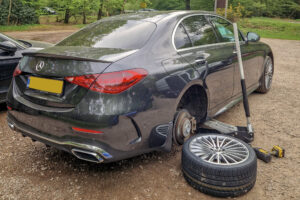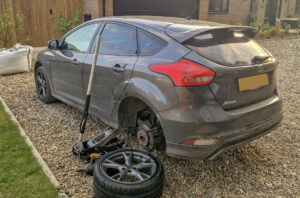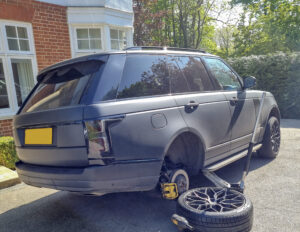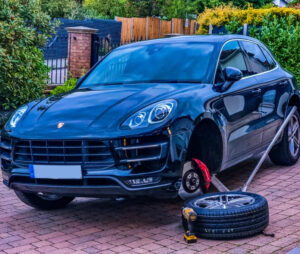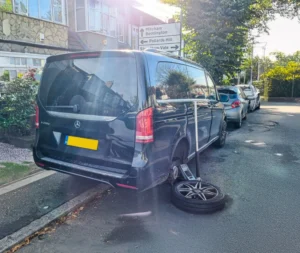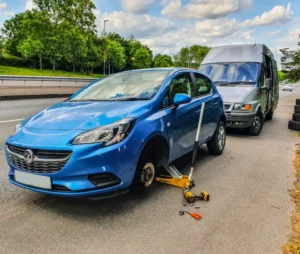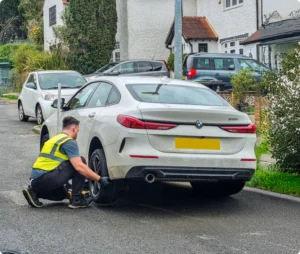
Most drivers never look at their tread depth until an MOT reminder lands, or until a police officer points at their front tyre and asks an awkward question.
That’s a shame, because it’s one of the easiest things on a car to check yourself. We cover the full picture on tyre punctures and repairs in our complete guide to tyre puncture repair, but tread depth deserves its own explanation.
It takes less time than finding a parking space, and it costs nothing if you already own a 20p coin.
What Counts as Legal Tyre Tread Depth in the UK
The legal tyre tread depth in the UK is 1.6mm, measured across the central three-quarters of the tyre, all the way round.
Anything below that isn’t a grey area. It’s illegal, and it’s dangerous, in roughly that order of how a police officer will see it.
Vans and trailers follow slightly different rules depending on load and axle configuration. For a standard car, motorbike, or light van, the 1.6mm figure across the central band is the number that matters.
The 1.6mm Rule, and Why It’s the Bare Minimum
The 1.6mm tyre law sets the floor, not a sensible target. Most manufacturers and independent safety bodies recommend replacing tyres closer to 3mm, especially heading into winter.
Wet grip drops off sharply as tread wears down. A tyre at 1.6mm can take significantly longer to stop in the rain than a tyre at 3mm, even though both are technically legal on the day of an MOT.
Minimum tyre tread isn’t the same as safe tyre tread. It’s just the point where the law stops giving you the benefit of the doubt.
Tyre manufacturers test wet braking distances at different tread depths, and the results are stark.
A car braking from 50mph on a wet road can need several extra car lengths to stop once tread has worn down to the legal minimum. That’s compared with a fresher tyre under the same conditions.
That gap is exactly the kind of thing that matters in the split second before a collision, not after it.
How to Check Tyre Tread Depth at Home
You don’t need anything specialist for a rough check. A 20p coin works fine.
Insert the coin into the main tread grooves at a few points around the tyre. If the outer band of the coin disappears into the tread, you’re comfortably above the legal limit. If it doesn’t, get the tyre looked at properly.
The 20p test isn’t perfect. It tells you roughly where you stand, not an exact figure, and it’s easy to miss a patch of wear if you only check one spot. Think of it as a quick early warning, not a substitute for a proper measurement.
Using a Tyre Tread Checker Properly
A proper tyre tread checker gives you an exact number instead of a rough pass or fail. They’re inexpensive, widely available, and worth keeping in the glovebox if you’d prefer not to guess.
Push the gauge’s pin firmly into a groove until the base sits flat against the tread. Read the measurement, then repeat it at both edges and the centre of the tyre, since wear is rarely perfectly even.
Check more than one tyre too. It’s common for the two front tyres to wear at noticeably different rates from the rears. This shows up most on front-wheel-drive cars, which do most of their braking and steering through the front axle.
What a Fine for Illegal Tyre Tread Really Looks Like
Driving on tyres below the legal limit carries a fine of up to £2,500 per tyre, plus three penalty points. Four illegal tyres, in theory, could mean a driving ban on points alone.
The Highway Code’s guidance on vehicle maintenance sets out the legal position in full, including how tread depth is measured and what other tyre defects carry the same penalties.
A Typical Callout We See Every Week
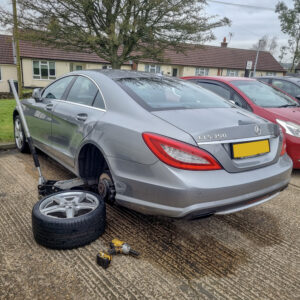
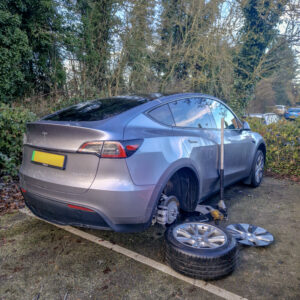
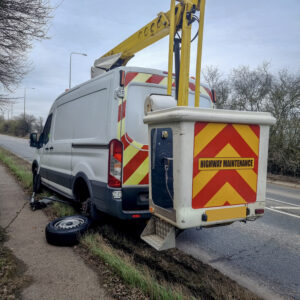
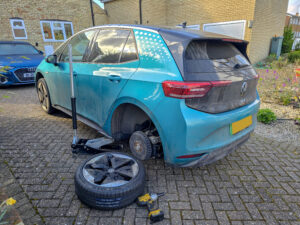
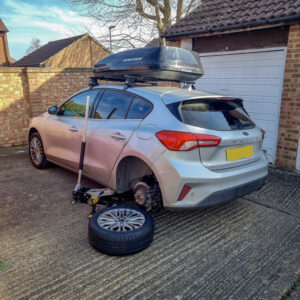
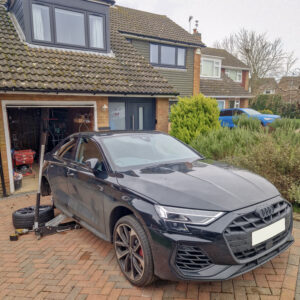
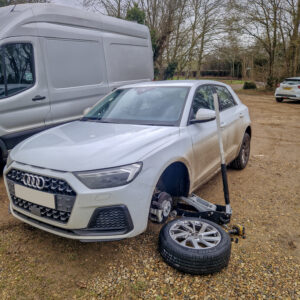
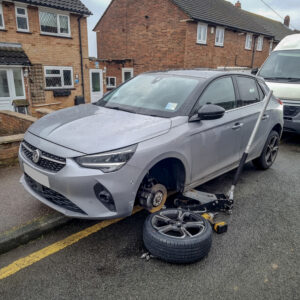
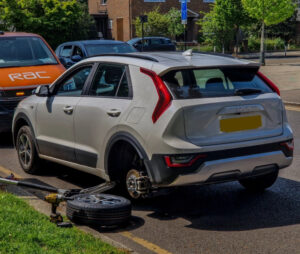
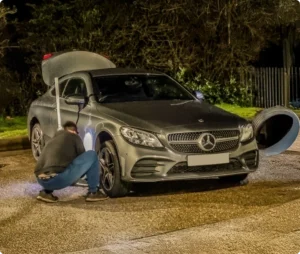
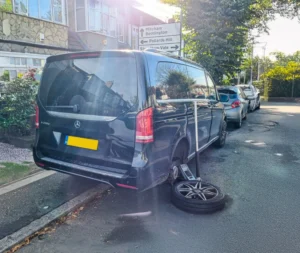
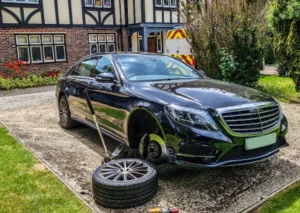
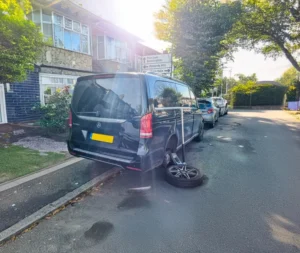
A fairly ordinary Tuesday for us might start with a call from someone who’s just failed their MOT on tread depth and had no idea it was coming.
They’ve usually driven the car for years without a second thought. The advisory notice mentioned it last time, quietly, and got filed away and forgotten.
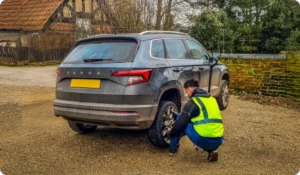
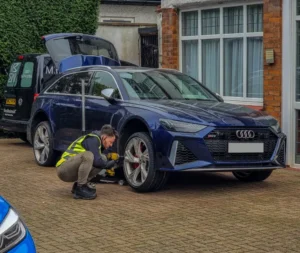
We turn up, check all four tyres properly instead of just the two that failed. It’s common to find a second tyre sitting right on the edge of the limit too.
Front tyres wear faster than rear ones on most cars, so if one’s gone, the other often isn’t far behind.
Most of these calls end with two tyres replaced on the spot instead of one. It doesn’t make sense to drive away and repeat the whole process again in a fortnight.
Winter tends to bring these calls in clusters. Colder roads and more standing water expose marginal tread far faster than a dry summer does. A tyre that scraped through an MOT in June can feel noticeably worse by November, even without any extra mileage.
Taking a Nail Out Safely, Step by Step
Tread checks often turn up more than wear. A nail, sitting quietly in a groove, is one of the most common finds.
Here’s what happens once we’ve found one, in the order we do it:
- We check the tyre pressure first, before touching anything, to see how much air the nail might already be letting out.
- We mark the nail’s position with chalk so we can find it again once the wheel’s off the car.
- We break the bead and remove the tyre from the wheel completely, instead of trying to work around it while it’s still fitted.
- We inspect the inside of the tyre around the puncture channel, checking for cord damage that isn’t visible from outside.
- We clean and buff the area around the hole so the repair material bonds properly.
- We insert a repair plug or patch that meets British Standard BS AU 159, sized to the hole.
- We reinflate the tyre and test the repair with a soapy water check, watching for any bubbles that would mean a leak.
- We rebalance the wheel and refit it, then check the pressure one final time before we leave.
Skipping any of those steps is how a “quick fix” ends up back on our books a fortnight later.
It’s worth saying plainly that this isn’t a job to attempt yourself without the right equipment. Breaking a tyre bead safely needs proper tools, and inspecting for internal damage needs the tyre fully off the wheel, not just deflated.
A patch applied without either step might hold air for a while. It won’t necessarily hold at motorway speed.
A Case Study From Wheathampstead

A customer in Wheathampstead, who we’re calling Fiona here to protect her privacy, called us after her tyre pressure light stayed on for a week despite regular top-ups.
We found two issues at once. A small nail sitting cleanly in the tread, and tread depth on the opposite front tyre down to 2mm, well on its way towards the legal limit.
The nail was a straightforward repair, fifteen minutes once we arrived. The worn tyre needed replacing, which we did on the same visit so she wasn’t left with a mismatched pair or a second call-out later in the month.
She told us afterwards she’d genuinely had no idea the second tyre was that close to the limit. That’s typical. Tread wear is gradual enough that most drivers only notice it once someone else points it out.
We left her with both front tyres matched and a rough idea of when to expect the rears to need attention too, based on how she’d worn the fronts. It’s a small thing, but it saves a second unplanned call-out a few months down the line.
Get Your Tread Checked Before It Checks You
A 20p coin takes ten seconds. An MOT failure, a fine, or a longer stopping distance in the rain take considerably longer to sort out.
If you’re anywhere across Hertfordshire and want a proper check instead of a coin and a guess, our mobile tyre fitting service can help. We’ll come to you and measure all four tyres properly.
If it turns out you need new tyres the same day, our same-day tyre fitting service means you’re not driving around illegally while you wait for a slot.
For a closer look at what a fitter genuinely carries with them on the day, our post on what a mobile tyre fitter keeps in his van covers exactly that. If you’re due new tyres anyway, our guide on how to buy tyres in North London walks through the options.
TyreSafe publishes seasonal reminders on exactly this topic, and it’s worth a follow if you’d rather not rely on remembering to check.
Prefer to call? Ring us on 07411 448680.