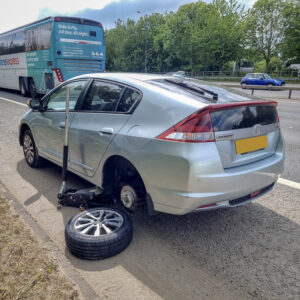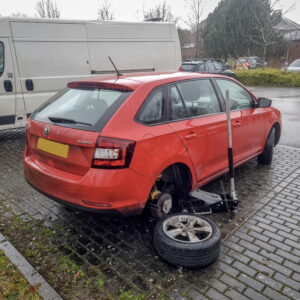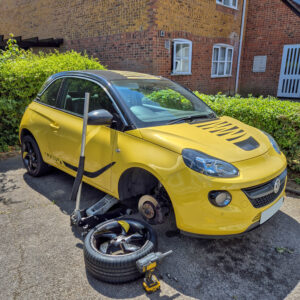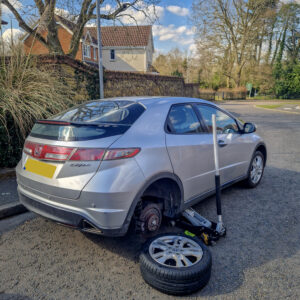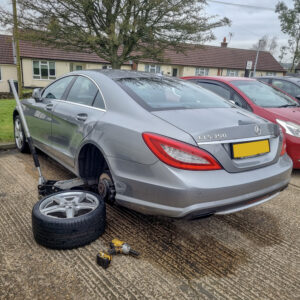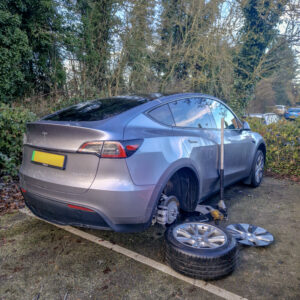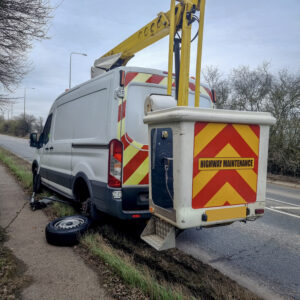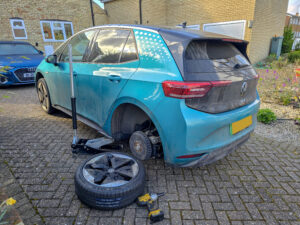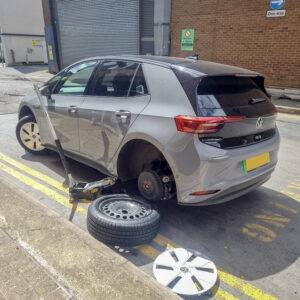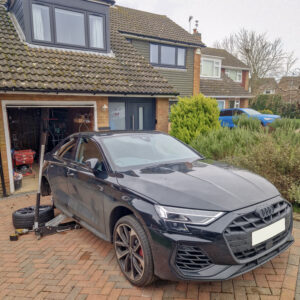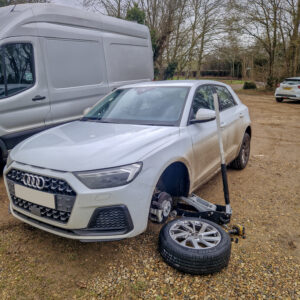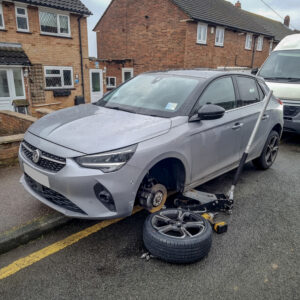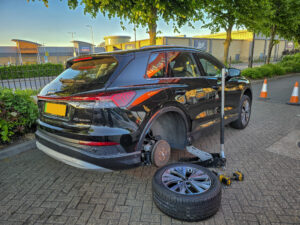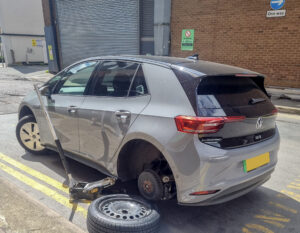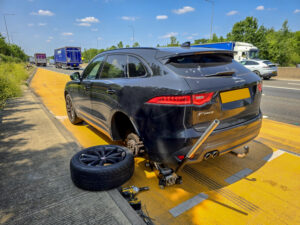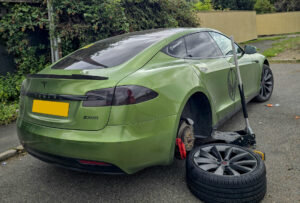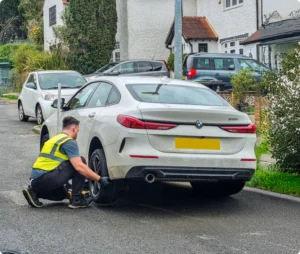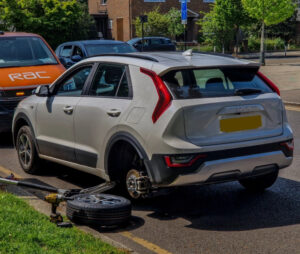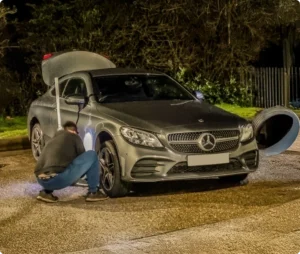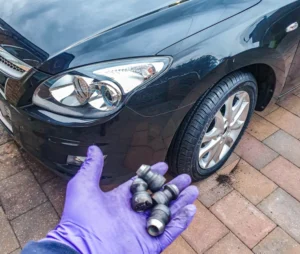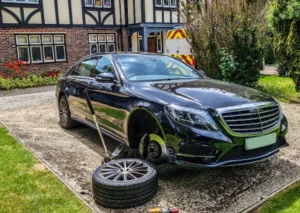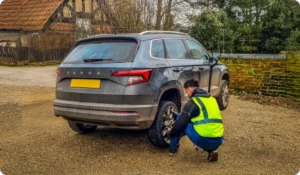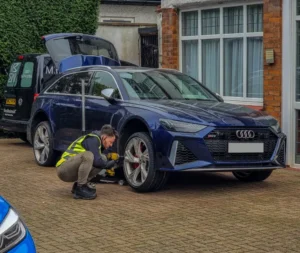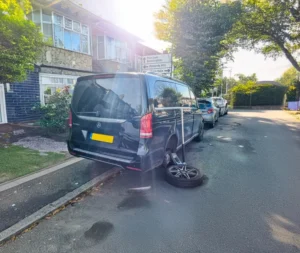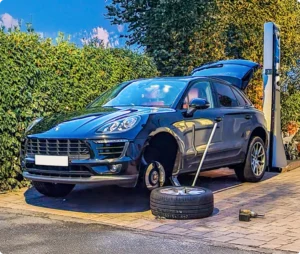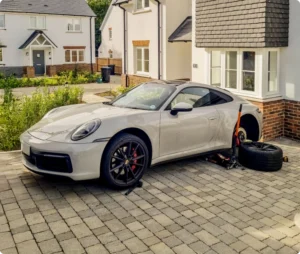
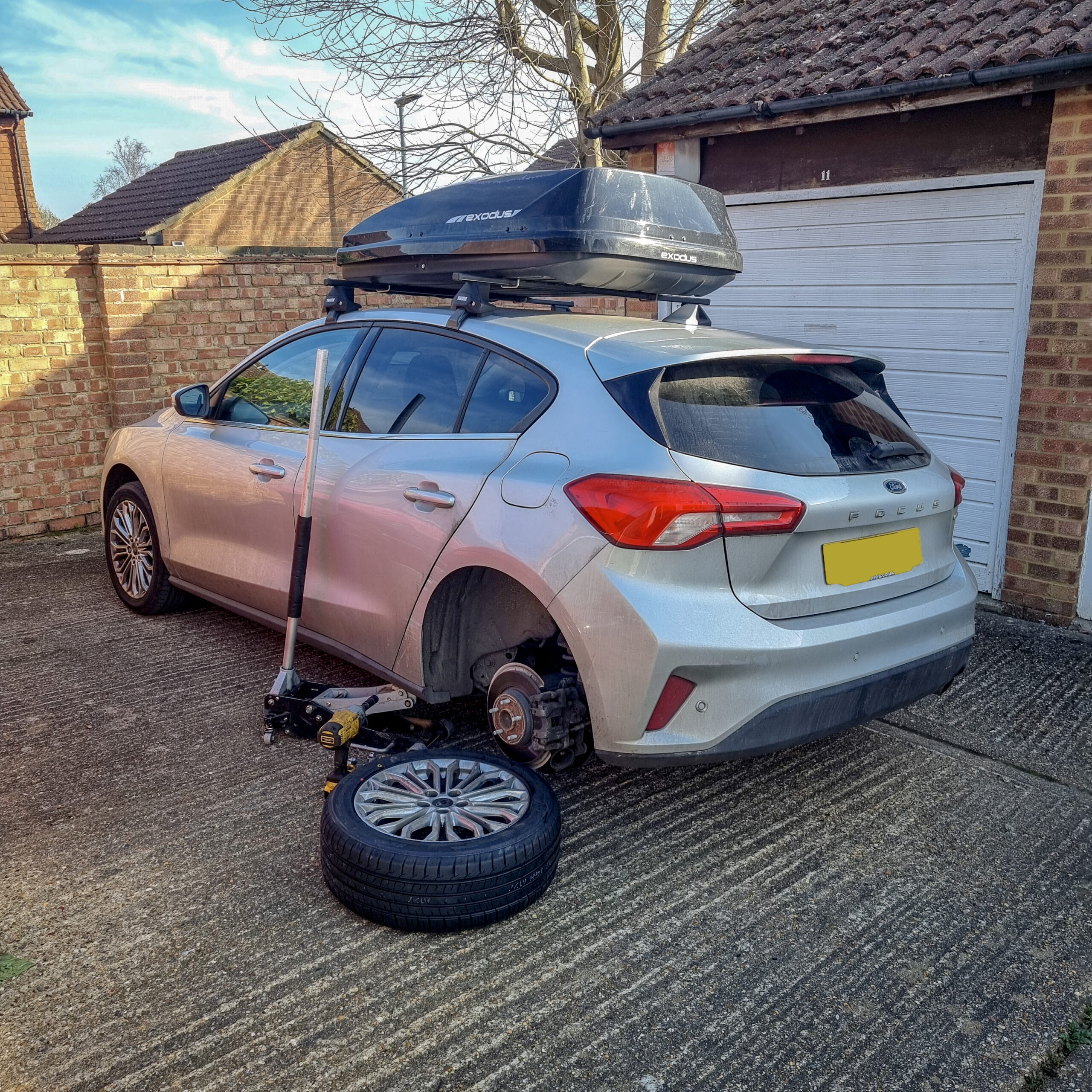
Changing a tyre isn’t difficult once you’ve done it properly once. Knowing when you shouldn’t attempt it at all matters just as much.
This guide covers both halves honestly. The mechanical process, and the situations where calling someone is the safer, smarter option. We go into the wider picture on tyre punctures in our complete guide to tyre puncture repair. This one’s about the physical job of getting a wheel off and a spare on.
Learning how to change a tyre is a genuinely useful skill, and most drivers only pick it up under pressure, at the roadside, with traffic going past. Doing it once calmly, in a car park or on a quiet driveway, makes the real version far less stressful.
Before You Even Reach for the Jack
Get off the road properly first. A flat verge, a layby, or a driveway is worth driving slowly towards, even on a damaged tyre, instead of working right on the edge of moving traffic.
Put the handbrake on and pop the car into gear, or park if it’s an automatic. Turn your hazard lights on straight away, and set out a warning triangle behind the car if you’re carrying one and it’s safe to do so.
Ground matters more than people expect. Soft grass verges, loose gravel, and any kind of slope make jacking a car unstable. Flat, firm tarmac is worth walking a short distance to find if your immediate spot doesn’t offer it.
Children and pets, if they’re travelling with you, are safer out of the car entirely and standing well back. They should ideally wait behind a barrier or verge, instead of on the roadside itself. It’s an easy thing to overlook when you’re focused on the tyre.
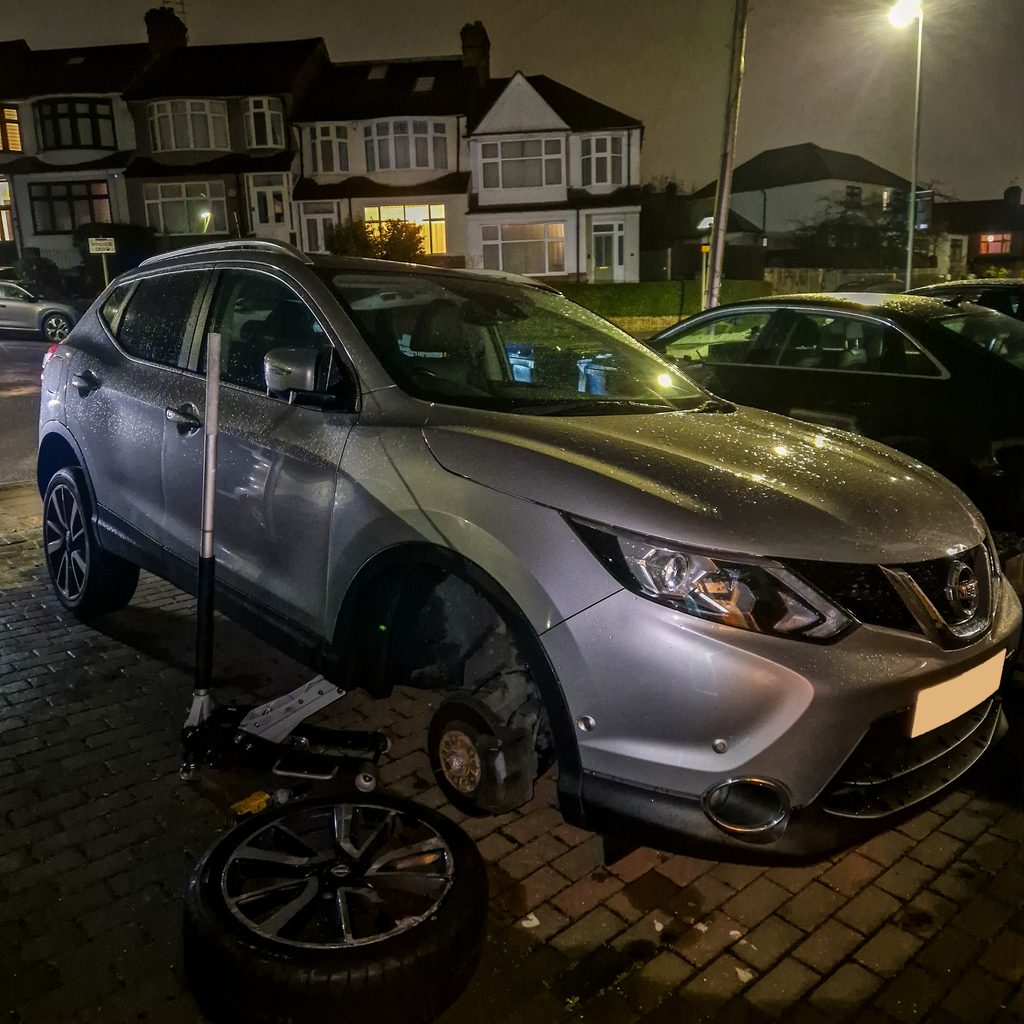
What You’ll Need Before You Start
Most cars carry a jack, a wheel wrench, and either a full-size or space-saver spare, usually under the boot floor. Check yours before you need it, not during an actual roadside emergency.
A few extras make the job considerably easier. Wheel wedges or a couple of bricks to stop the car rolling are worth having. So is a torch if it’s dark, and gloves, since brake dust and road grime on a wheel rim aren’t pleasant.
A space-saver spare is worth understanding before you rely on one. They’re smaller and lighter than a full-size tyre, usually rated for a limited speed and distance printed right on the sidewall. Treat that limit seriously instead of as a rough guideline.
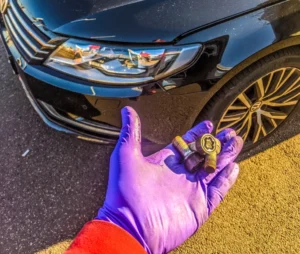
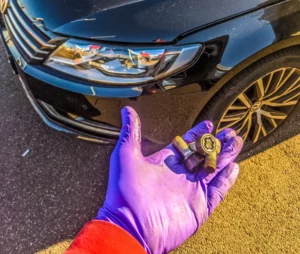
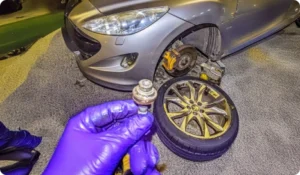
If your wheels have locking nuts, find the key before you start. It’s usually kept in the glovebox or boot, and the job stops dead without it. Losing that key is one of the more common reasons drivers end up calling someone anyway, and our locking wheel nut removal service exists specifically for that situation.
How to Jack Up a Car to Change a Tyre Safely
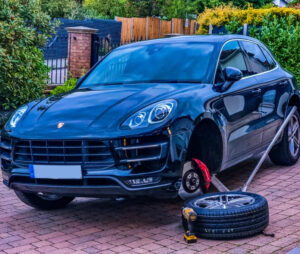
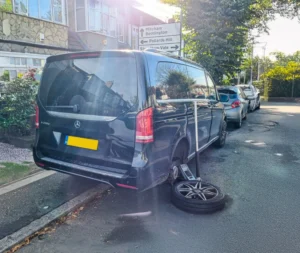
Loosen the wheel nuts slightly before you jack the car up, while the wheel’s still on the ground and can’t spin freely. A firm push with your foot on the wrench, instead of just your hands, usually breaks them free.
Locate the correct jacking point for your car. It’s normally a reinforced section of the sill, marked with a small notch. It’s worth checking your handbook instead of guessing, since jacking under the wrong spot can dent the bodywork.
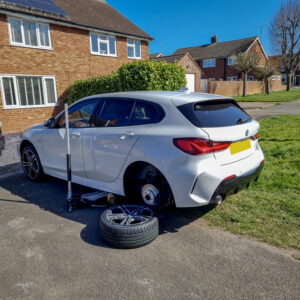
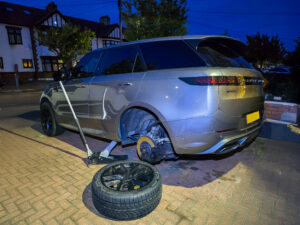
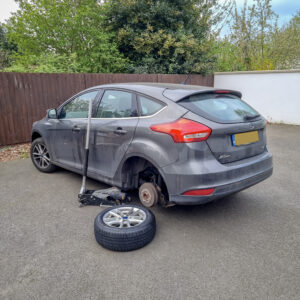
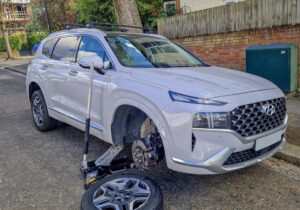
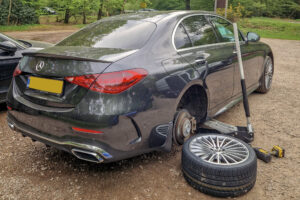
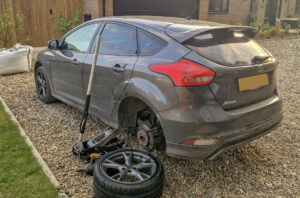
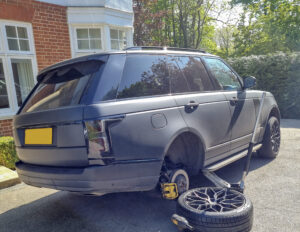
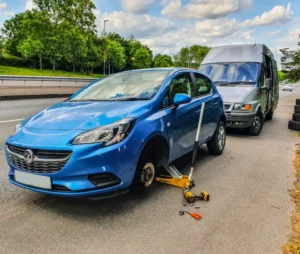
Raise the car until the damaged tyre is a few centimetres clear of the ground. Go slowly, and keep an eye on the car’s stability as it lifts.
If the car feels like it’s rocking or the jack seems to be sinking into the ground at all, stop and lower it back down. It’s far better to find firmer ground or a different jacking point than to keep going and hope for the best.
Tyre Change Steps From Start to Finish
Knowing how to change a flat tyre in the UK follows the same sequence whatever car you’re driving, though the exact tools and jacking points vary by model.
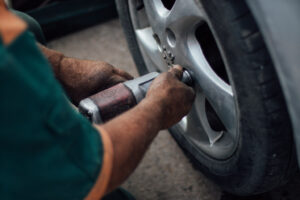
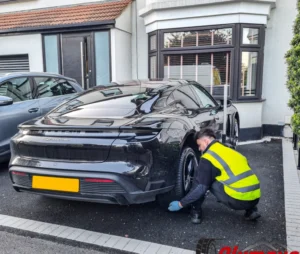
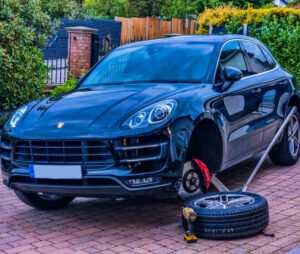
With the wheel clear of the ground, finish removing the nuts you loosened earlier and set them somewhere you won’t lose them. A hubcap turned upside down works well as a makeshift tray.
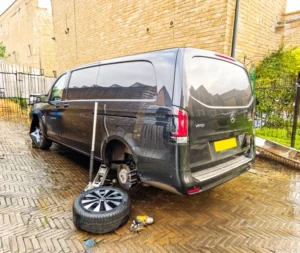
Pull the damaged wheel straight off towards you. It can be heavier than expected, especially on larger cars, so keep your back straight and lift with your legs.
Line the spare up with the wheel bolts and push it into place. Refit the nuts by hand first, tightening them just enough to hold the wheel steady.
Double check the spare’s own pressure once it’s on, if you have a gauge to hand. Space-saver spares are often stored under-inflated to save room, and driving on one without checking can catch drivers out on top of an already inconvenient day.
Lower the car back to the ground before doing the final tightening. Standing on a wheel wrench with the car still jacked up is how jacks slip and cars come down suddenly.
Once it’s back on the ground, tighten each nut firmly in a star pattern instead of working round in a circle, which keeps the wheel seated evenly.
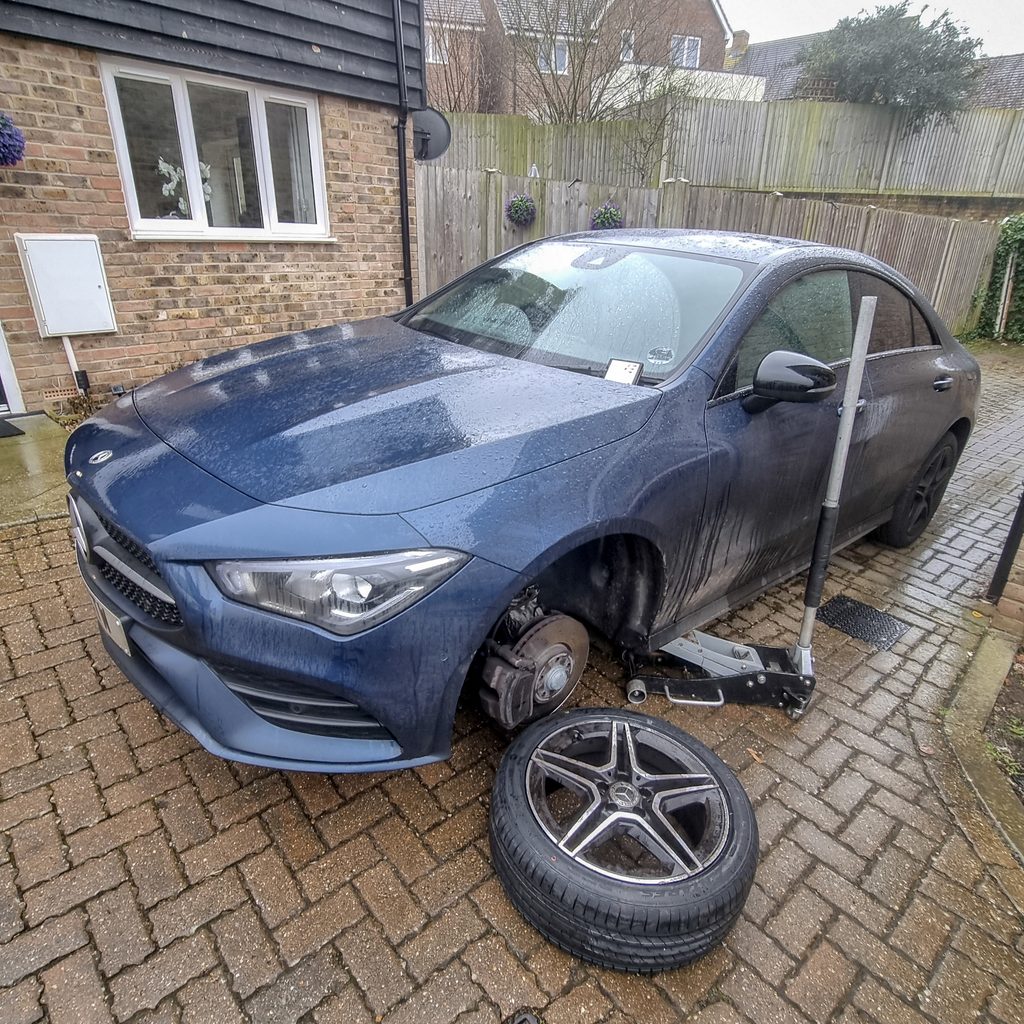
When It’s a Genuine Emergency Tyre Change
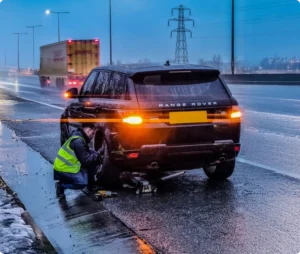
Not every puncture happens somewhere sensible. A tyre going on a motorway, in the pouring rain, or in a dark and poorly lit spot changes the calculation considerably.
An emergency tyre change on a motorway hard shoulder is something professionals recommend against attempting yourself. National Highways’ own guidance is clear that the hard shoulder is one of the most dangerous places on the road network. Vehicles pass within feet of it at full speed.
If you’re stuck in a genuinely dangerous spot, our emergency tyre fitting team covers exactly that kind of call-out, day or night.
When Not to Change a Tyre Yourself
A few situations are worth recognising as your cue to call someone instead of pushing on alone.
No spare, or a spare that’s also flat, obviously rules out a DIY fix entirely. It happens more often than you’d think, and we’ve covered exactly what to do after a blowout with no spare in more depth elsewhere.
A locking wheel nut with no key is another dead end without specialist tools. So is a wheel that’s seized onto the hub, which happens more often on older cars that haven’t had a wheel off in years.
Weather is worth factoring in honestly too. Attempting a roadside change in heavy rain, strong wind, or icy conditions adds real risk on top of an already awkward job. There’s no shame in deciding it can wait for a professional in better conditions if the car’s parked safely.
Physical limitations matter too, and there’s no shame in them. A wheel wrench needs real force, and a wheel itself can weigh close to 20kg. If you’re not confident doing that safely, that’s exactly what a callout is for.
TyreSafe recommends getting any wheel change checked over afterwards if you’re at all unsure it was done correctly, since an under-tightened wheel is a genuine safety risk.
A Case Study From Borehamwood
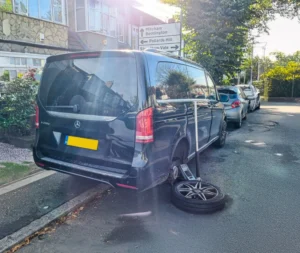
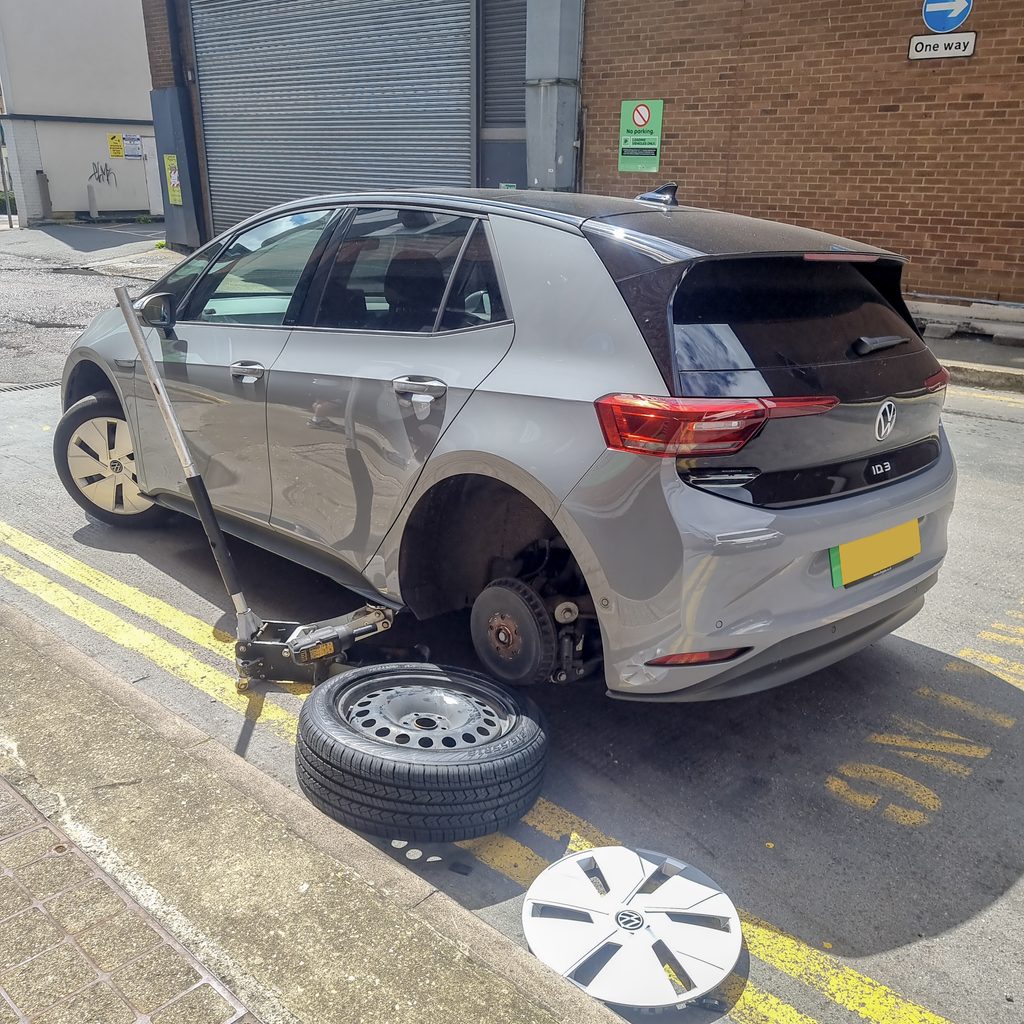
A customer in Borehamwood, who we’re calling Marcus here to protect his privacy, called us after getting partway through changing a tyre himself and hitting a problem. The spare in his boot was flat too, something he’d never checked.
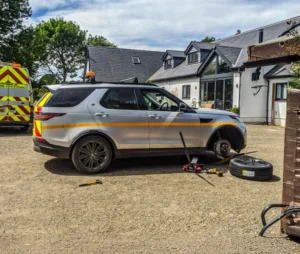
He’d already done the hard part safely, jacking the car on a flat section of pavement well away from traffic, and getting the damaged wheel off. We brought a replacement tyre, fitted it directly instead of making him drive anywhere on a temporary spare, and had him moving again within the hour.
He mentioned afterwards that he’d genuinely assumed a spare tyre couldn’t go flat sitting unused in a boot. It can, slowly, exactly like any other tyre, which is worth a quick check next time you’re near it.
Know Your Limits, and Call When You Hit Them
There’s no failure in changing half a tyre and then calling for help. The failure is pushing on somewhere unsafe because you feel like you should be able to finish the job.
Most people who ask us how to change a tyre only need to do it once before it stops feeling intimidating. The process itself isn’t the hard part. Knowing when to stop and call someone is.
If you’d rather skip the process altogether, our mobile tyre fitting service can come to you and handle the whole thing properly, spare tyre or not. For anything that needs sorting today, our same-day tyre fitting service means you’re not left waiting around on a temporary fix any longer than necessary.
Prefer to call? Ring us on 07411 448680.