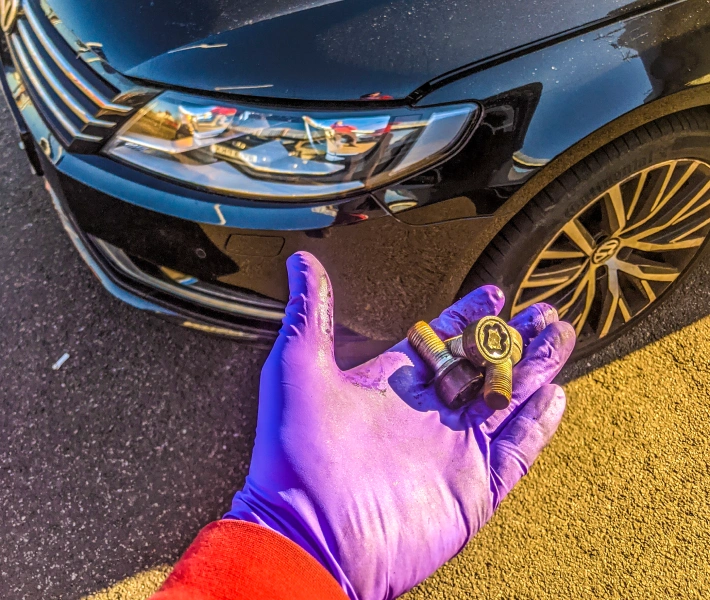
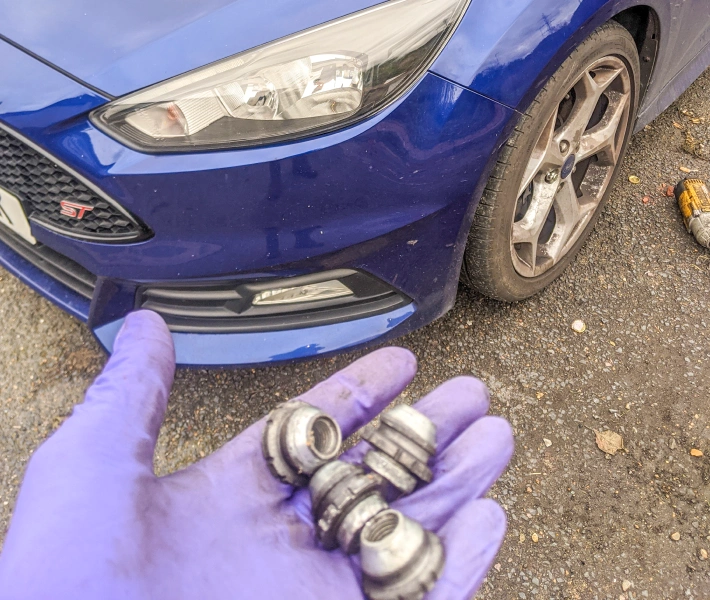
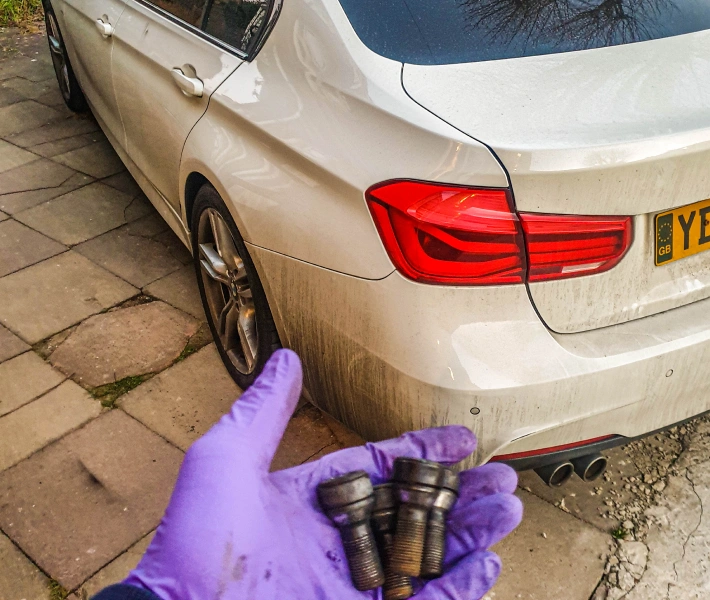
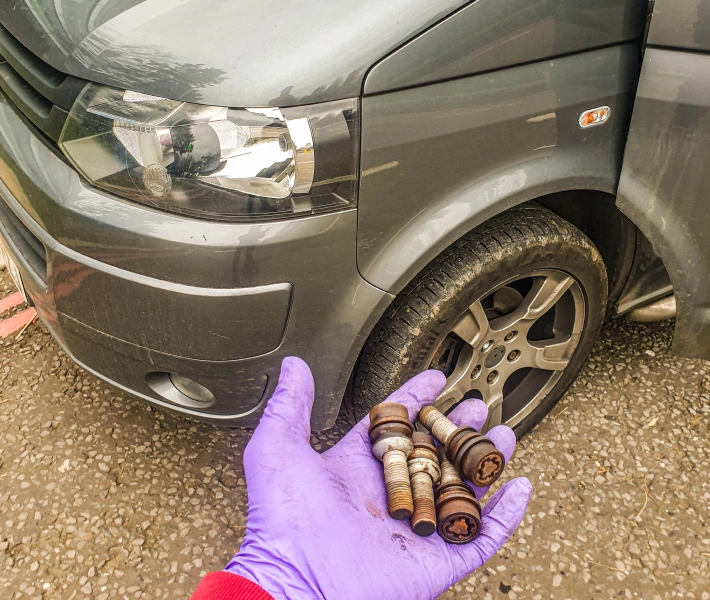
How do you get a locking wheel nut off?↓
Our gear leaves the wheels and the car untouched, which is the whole point of calling a professional rather than attacking it yourself. Getting a locking nut off without the key is genuinely tricky, and reaching for a hammer and chisel, as many people do, tends to chew up the nut and often the wheel with it.
The method depends on the state of the nut. If the head is intact but the key is missing, we fit a specialist gripping socket that bites into the pattern and winds it off under controlled torque. If the head is already rounded or damaged, we grip or cut below the damage and back it out from there. Either way, the work is slow and deliberate, so nothing slips and scars the alloy.
Once it's off, we check the stud underneath, fit your replacement, and torque it to the manufacturer's setting so the wheel is safe and the nut comes off cleanly next time. Start to finish, it's usually a matter of minutes.
Where's my key hiding?
↓
On a newish car you've not had the wheels off yet, the key is almost certainly wherever the manufacturer tucked it at the factory. It's a small socket-shaped adapter, sometimes in its own little pouch, and it's easy to overlook if you don't know what you're looking for.
Worth a look in the glovebox first, then around or under the spare wheel, any separate boot compartments, and the boot floor storage. After that, check the first aid kit, the seat pockets, under both front seats, the door card pockets, and the centre console. On some models it's clipped in alongside the jack and wheel brace rather than stored separately.
If you've hunted through all of those and come up empty, it's likely lost rather than hidden, at which point we can remove the nuts without it and sort you a replacement set.
What is locking wheel nut removal?↓
Locking wheel nut removal simply means taking the locking lug nut off the hub without harming the rim's structural integrity. The locking nut is the odd one out among your ordinary wheel nuts, designed to deter theft by only turning for its matching key.
Removing it is a controlled job, not a brute-force one. The aim is to free the nut while leaving the wheel, the alloy, and the surrounding studs completely sound. Once it's off, you've got a choice: fit a brand-new locking nut, or refit the original standard nuts if they're still in good condition and you'd rather not bother with locks at all.
What does a replacement locking wheel nut cost?↓
Expect somewhere in the region of £20 to £60 for a replacement locking nut, depending on the manufacturer and the vehicle. Some makes charge more for their particular design, and a full set of four will naturally cost more than a single nut.
If yours is past saving, buy the replacement through your car's maker rather than a generic option, since the fit and thread vary by brand and the wrong one can cause more problems than it solves. We'll advise on exactly what your vehicle needs and can supply and fit the replacement on the spot, so you're not left waiting on a parts order.
I've lost my locking wheel nut. What now?↓
It happens all the time. Plenty of people buy a car, van, camper, motorhome, trailer, or even a horsebox only to find the key already gone, and just as many snap or mislay their own further down the line. It's a nuisance, but it's a routine one for us.
There's no need for anything invasive or dramatic. Our fitters remove the nuts cleanly using specialist tools, then point you toward a genuine or aftermarket replacement key so you're properly set up going forward. If you'd sooner switch to standard nuts and skip the locks entirely, we can do that instead. Either way, one call gets you sorted and back on the road.
Where can I find my locking wheel nut key code?↓
Where can I find my locking wheel nut key code?
The code is a short reference, usually a mix of letters and numbers, that lets a dealer match or cut a fresh key to your car's particular locking set. The first place to look is your vehicle handbook, where it's often printed on a card or sticker tucked inside the wallet, sometimes on the same page as the radio code or key numbers.
If it's not there, check the service book and any paperwork that came with the car when you bought it, as the code is frequently recorded with the original documents. On some vehicles it's stamped onto the locking nut key itself, or printed on a small tag that came attached to it, so it's worth checking the key before you assume the code is lost.
Buying a used car is where most people come unstuck, because the previous owner never passed the code on or lost it years ago. If you've drawn a blank everywhere, your dealer can often look the code up against your registration or VIN, though some makes have stopped offering this, which is exactly the gap our service fills.
If the code has genuinely vanished and no replacement key can be sourced from it, don't worry. We remove the nuts without needing the code at all, then help you set up a fresh locking set with its own key, so you're never stuck in the same position again.

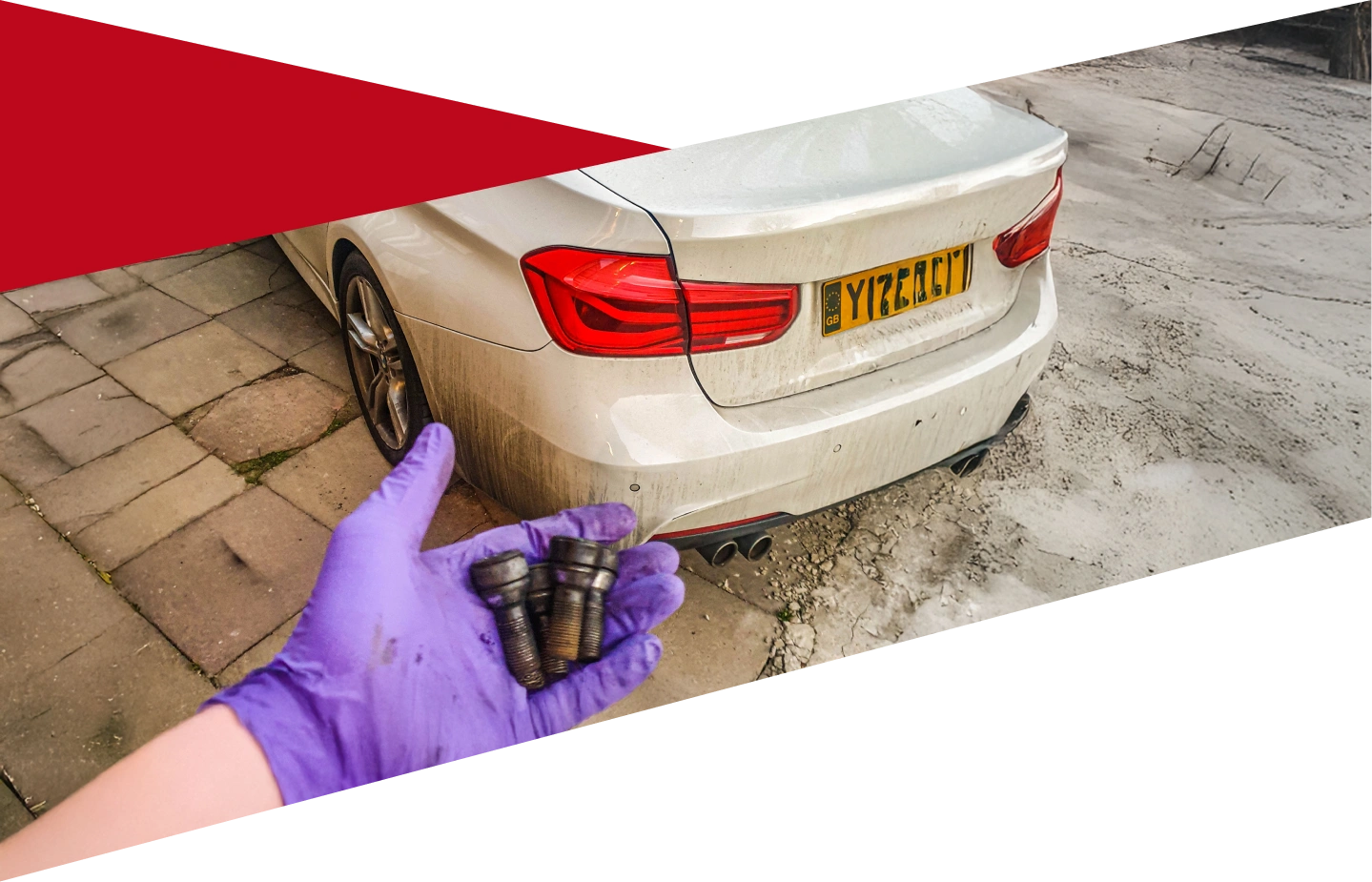
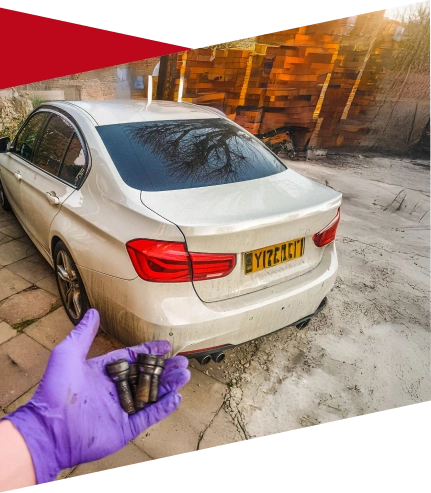


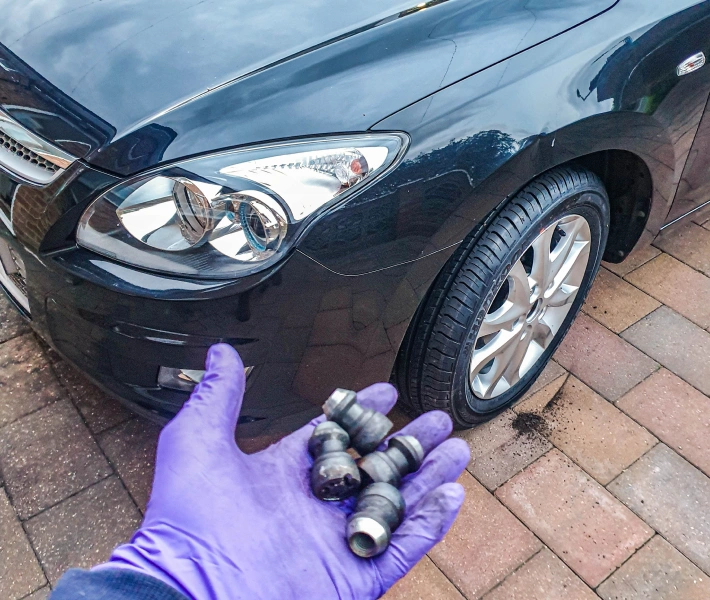


 100% Success rate in removing locking nuts.