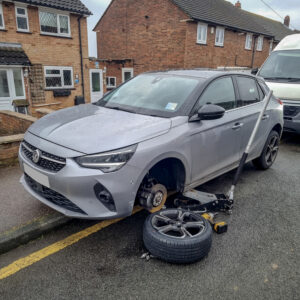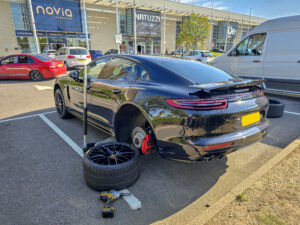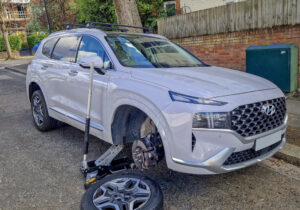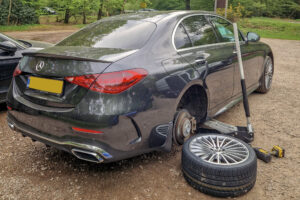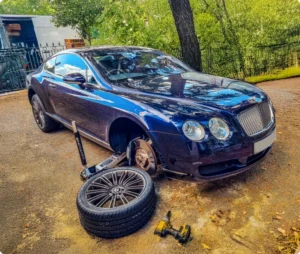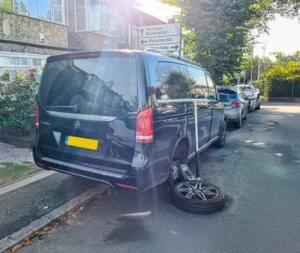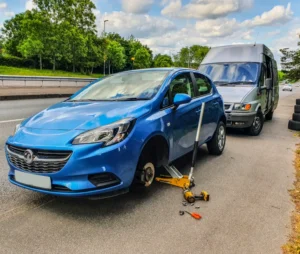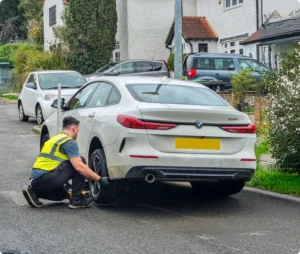
Tyre technology gets about as much attention as the inside of a toaster, and yet your tyres are the only part of your car that really touches the road. Everything the engine and the brakes do has to pass through them.
That makes them worth understanding, especially when the time comes for mobile tyre replacement and you’re staring at a choice of tyres that all look like black rings. Each material and each groove has a job, and knowing those jobs helps you buy better and drive more safely.
This article sits alongside our complete Herts and North London guide and keeps the science in plain English. We’ll follow four themes through the tyre, which are performance, safety, efficiency, and longevity.
Every figure below comes from GOV.UK or a UK tyre safety charity, so you can check it for yourself. Put the kettle on, because there’s more going on inside that rubber than most of us expect.
Tyre Technology Starts With a Clever Layer Cake
A tyre looks like one simple black ring. Look at how it’s built and you find layers that each earn their keep, from the rubber you can see to the steel and fabric you can’t.
A Rubber Recipe With Over Thirty Ingredients
TyreSafe, the UK tyre safety charity, explains that the rubber in a tyre comprises over thirty different kinds of rubber, fillers, and other ingredients, all blended into one compound. That’s a longer ingredient list than most ready meals.
Tread is the part of that blend that meets the tarmac. According to TyreSafe, it provides grip and cushioning, and it wears over time.
That explains why two tyres can look identical in the showroom and feel quite different on the school run. The recipe inside the rubber shapes the ride from the first mile to the last.
A Skeleton Built to Flex and Hold
Underneath the rubber sits the carcass ply, which TyreSafe calls the tyre’s skeleton. It’s made of fabric layers that keep the tyre flexible while reducing elasticity, and it adds to the tyre’s strength.
On top of that skeleton, steel belts wrap around the tyre to reinforce its strength, add durability, and give extra puncture resistance. Picture a stray screw meeting a tyre on a wet Tuesday morning, and you can see why those wires matter.
At the edges, steel-reinforced beads form an airtight seal between the tyre and the wheel rim. The shoulder, the small bevelled edge between the tread and the sidewall, plays a big part in how a car corners.
Grooves and Sipes That Do the Hard Work
Look closely at a tread and you’ll see deep grooves and much finer cuts called sipes. TyreSafe says the deep grooves disperse water, while the smaller sipes help in icy conditions.
Think of the pattern as a drainage system that you wear down with every mile, which is exactly why the next section matters so much.
Picture a wet Monday on the North Circular, with spray flying and brake lights glowing red ahead of you. In moments like that, the grooves are working harder than anyone in the car, and nobody ever thanks them.
Safety Gets Its Edge From Smart Design
Safety is where all those layers and grooves pay off. Two things matter most, which are how well your tyres grip in the wet and how quickly you find out when something is wrong.
Wet Grip and the Gap in Stopping Distance
TyreSafe’s tyre safety figures show what tread does in the wet. A car braking from 50mph on a wet road stops in 25.9 metres on a new 8mm tyre, but it needs 37.8 metres on a tyre worn to 1.6mm.
That gap of almost 12 metres is a long way to travel when a brake light flashes ahead of you. Our tread depth guide shows you how to measure what’s left on your own tyres.
Tyre Technology That Warns You Before Trouble Starts
Modern cars carry a small piece of tyre technology that most drivers only notice when it glows. The tyre pressure monitoring system watches your pressure and lights a warning on the dashboard.
It matters enough that the MOT looks at it. GOV.UK’s MOT inspection manual says the check applies to passenger cars first used on or after 1 January 2012.
A system that is malfunctioning or obviously not working counts as a major defect. The manual also explains that the warning lamp normally lights when you switch on the ignition and then goes out. A lamp that flashes several times before staying on can point to a malfunction.
So if that little light stays on, take it seriously. It’s your car telling you a tyre needs attention before the problem gets bigger.
Efficiency You Can Read Right Off the Label
Efficiency sounds like a topic for engineers, but tyre technology ends up in your wallet. The tyre label gives you a way to see it before you buy.
Rolling Resistance and Your Fuel Bill
Every tyre resists rolling a little as it flexes against the road, and that effort has to come from your fuel tank. The Vehicle Certification Agency explains that rolling resistance accounts for 20 to 30% of a vehicle’s fuel consumption.
It also reports a 7.5% loss of fuel economy between the best and worst classes for a full set of tyres on an average car. Picture two neighbours with the same car and the same commute, and you can see how one of them ends up filling the tank more often.
The Letters and the Noise Figure
According to GOV.UK, the tyre label in Great Britain rates fuel efficiency and wet grip from A to G. It also shows the external noise level in decibels, and a lower figure means a quieter tyre.
GOV.UK says distributors must give the fuel efficiency, wet grip, and noise information on or with the bill for passenger car and light commercial tyres. Keep that paperwork with your car’s records, because it tells you exactly what’s on your wheels.
Those three numbers let you compare any two tyres on equal terms. Our guide to the quietest tyres shows you how to use them together.
Pressure, the Cheapest Upgrade Going
TyreSafe’s figures also show that a car with tyres 6psi below the recommended pressure uses 3% more fuel. The same figures list a 10% reduction in tyre life among the effects of running on low pressure.
Across the country, TyreSafe’s Case for Action estimates that £1 billion worth of fuel is wasted every year because of underinflated tyres. TyreSafe recommends checking pressure monthly with a reliable gauge. Our tyre pressure guide takes you through it step by step, and it costs you nothing but a few minutes.
Longevity Comes From Smart Habits as Well as Smart Rubber
Most of us treat tyres like the loft insulation of the car, out of sight and out of mind until something goes wrong. Even the best tyre technology in the world wears out, so how you treat a tyre decides how long it lasts. Two habits do most of the work, and neither needs special tools or a free afternoon.
Tread Depth, the Legal Limit and the Sensible One
According to GOV.UK, the legal minimum tread depth for cars is 1.6mm across the central three-quarters of the tyre. TyreSafe suggests you consider replacing tyres once the tread falls below 3mm.
Treat 1.6mm as the line you must never cross, and 3mm as the point where you start planning. That gives you a margin for the wet-weather grip we covered earlier.
Money is on the line too. TyreSafe states that illegal tread can bring a fine of up to £2,500 per tyre and three penalty points, which is far more than a new tyre costs.
Gentler Driving, Cleaner Air
Tyres shed tiny particles as they wear, and the government has taken notice. A 2019 GOV.UK press release cited a government air-quality report that predicted tyres and brakes would account for 10% of national PM2.5 emissions by 2030.
The same release says gentle braking and consistent speeds can reduce those emissions. A smoother driving style is good for the air, and it should be kind to your tread as well.
Choosing Tyres With the Science on Your Side
You don’t need a chemistry degree to pick a good tyre. You need the right size, a sensible tier, and a fitter who checks the details.
Think of it as a pub quiz where you already know the answers. Once you’ve read the sidewall, the label, and the tread, there’s very little left to guess.
Matching Size, Load, and Speed Ratings
Every tyre carries a code on its sidewall, such as 205/55R16. TyreSafe lists that as the most common tyre size in the UK, but your car may use something different.
We check the correct sizes for the front and rear axles, along with the load rating and the speed rating. A tyre that doesn’t meet your car’s requirements isn’t a tyre we’ll fit.
Budget, Mid-Range, and Premium Tiers
Our budget tyres start from £100, fitted, and that price includes the tyre, the fitting, a new valve, wheel balancing, and disposal of your old tyre. Mid-range and premium tyres cost more, and we quote before any work begins.
We carry tyres from manufacturers including Michelin, Dunlop, Continental, and Pirelli. Whatever the tier, we balance each wheel and set the pressure before we leave. Every tyre is new, and we only fit new tyres for good reason.
Book Your Tyre Fitting Today
Tell us about your car and how you drive, and we’ll talk you through the tyres that suit you. We cover North London and Hertfordshire, and a fitter will come to wherever you’ve parked.
Call us on 07411 448680.